Calculate how much gravel base goes under your concrete slab, with project-specific depth recommendations and material guidance.
Why Concrete Needs a Gravel Base
Concrete cracks for three main reasons: poor sub-base, inadequate reinforcement, and improper curing. Of these, sub-base is the most common DIY failure point. The gravel base under your slab does three critical jobs:
- Load distribution: Spreads the concrete weight (4,050 lbs per cubic yard) plus any additional load (vehicle, structure) evenly across the soil, preventing localized settling.
- Drainage: Allows water to drain away from the underside of the slab. Water trapped under a slab in freeze-thaw climates causes heaving, which cracks the slab from below.
- Frost protection: In cold climates, gravel acts as a buffer between frozen soil and the slab. Frozen clay expands and pushes upward; gravel absorbs that movement without transferring it to the concrete.
Compaction -- The Step Everyone Skips
Loose gravel does nothing. Compacted gravel is structural. The difference between the two is a $50/day plate compactor rental and 30 minutes of your time:
- Hand tamp: Acceptable for sidewalks under 50 sq ft. Use a 6×6 inch wooden tamper or rented hand tamp.
- Plate compactor (single direction): Standard for residential patios and walkways. Rent for ~$50/day at Home Depot. Make 2 passes in perpendicular directions.
- Reversible plate compactor: Heavier (200-300 lbs) compactor for driveways and garage floors. Rent for $80-100/day.
- Roller compactor: For RV pads, foundations, and commercial work. Rent or hire a contractor with one.
Compact in 2-inch lifts (layers). Pour 2 inches of gravel, compact, pour the next 2 inches, compact again. Compacting a single thick layer leaves uncompacted gravel at the bottom that will settle later.
Sub-Base Math for Common Project Sizes
| Project | Base Depth | Gravel (cu yd) | Approx Cost |
|---|---|---|---|
| 4×20 ft sidewalk | 3 in | 0.81 | ~$40 |
| 10×10 ft patio | 4 in | 1.35 | ~$60 |
| 12×20 ft driveway | 6 in | 4.89 | ~$220 |
| 20×20 ft garage | 6 in | 8.15 | ~$365 |
| 20×40 ft RV pad | 8 in | 21.7 | ~$975 |
Drainage and Vapor Barrier Considerations
Beyond the gravel layer itself, two additional sub-base elements determine whether your slab survives long-term:
- Drainage at slab edges: Water naturally migrates along the slab/gravel interface. Slope the surrounding grade away from the slab at 1/4 inch per foot minimum. A French drain along one edge captures runoff for slabs with poor drainage.
- Vapor barrier placement: 6-mil polyethylene sheeting goes ON TOP of compacted gravel, directly under the concrete. Required for garage floors and any interior slab. Skip for outdoor patios where water needs to evaporate up through the slab.
- Geotextile fabric: Between native soil and gravel layer in soft soil conditions (clay, organic soil). Prevents soil from migrating up into the gravel and clogging the drainage path over time.
Gravel Sub-Base FAQ
How much gravel do I need under a concrete slab?+
For most residential applications: 4 inches of compacted #57 stone or crushed limestone. For a 10×10 patio, that means 1.35 cubic yards of gravel (about 2 tons), costing $50-80 delivered. Driveways need 6 inches minimum; RV pads need 8-12 inches.
Can I pour concrete directly on dirt without gravel?+
Technically yes, but the slab will fail. Concrete poured on bare soil has no drainage layer and no load distribution -- it will crack within 1-3 winters from freeze-thaw cycles and uneven settling. The only acceptable exception is when pouring on undisturbed bedrock or already-compacted gravel parking areas.
What type of gravel is best under concrete?+
#57 stone (3/4-inch crushed angular stone) is the all-purpose standard for residential pours. Crushed limestone is better for driveways and heavy-load applications because the finer particles fill voids and produce a more stable base. Never use pea gravel -- its rounded shape cannot be compacted properly.
Do I need to compact gravel before pouring concrete?+
Yes, always. Uncompacted gravel will continue to settle for years after the slab is poured, causing the slab to crack as it loses uniform support. Rent a plate compactor ($50/day at Home Depot) and make 2 passes in perpendicular directions for residential pours.
Should I put plastic vapor barrier under the gravel or on top?+
On top of the compacted gravel, directly under the concrete. The vapor barrier (6-mil polyethylene minimum) prevents ground moisture from migrating up through the slab. This matters for garage floors, basement slabs, and any slab that will support a finished structure. Skip for outdoor patios where water needs to evaporate.
Affiliate Disclosure: As an Amazon Associate, this site earns from qualifying purchases. Links on this page may earn a small commission at no extra cost to you.
Recommended Jobsite Tools
-
Leveling & Screeding
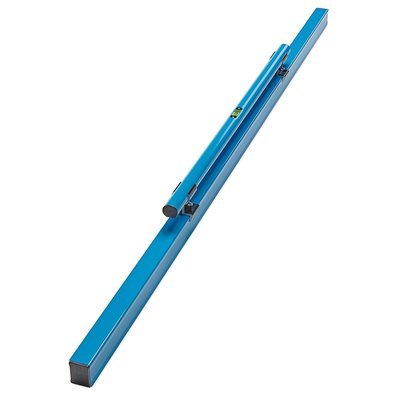
Aluminum screed board strikes off excess concrete level with your forms. Essential for smooth, even slabs.
Check Aluminum Screed Boards on Amazon → -
Hand Finishing
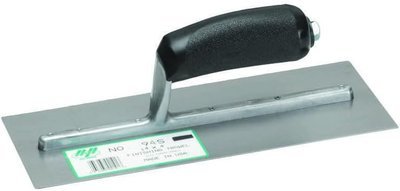
High-carbon steel trowel produces a hard, smooth finish once bleed water evaporates. Standard tool for every pour.
Check Concrete Trowels on Amazon → -
Knee Protection
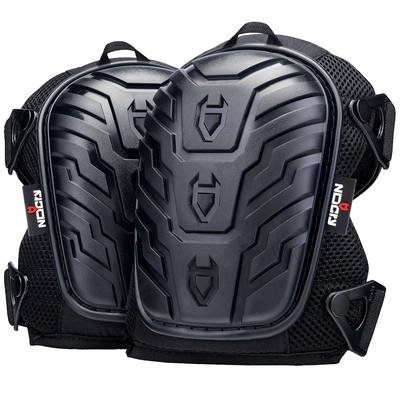
Heavy-duty gel knee pads protect your joints during long finishing hours on wet concrete and kneeling work.
Check NoCry Knee Pads on Amazon → -
Eye & Face Safety

ANSI Z87.1 approved safety glasses block alkaline wet concrete splashes before they reach your eyes.
Check NoCry Safety Glasses on Amazon →