
Step Dimensions by Code
| Application | Min Thickness | Recommended | Reinforcement |
|---|---|---|---|
| Sidewalk / Walkway | 3.5" | 4" | Optional fiber |
| Patio | 4" | 4" | Mesh recommended |
| Residential Driveway | 4" | 5" | Mesh or rebar grid |
| Garage Floor | 4" | 5-6" | Rebar grid required |
| RV/Truck Pad | 6" | 6-8" | Heavy rebar grid |
| Shed Foundation (small) | 4" | 4" | Mesh |
| Pool Deck | 4" | 4-5" | Mesh + control joints |
| Hot Tub Pad | 4" | 6" | Rebar grid |
For freeze-thaw climates (Northeast, Midwest, Mountain West), add 1 inch to the recommended thickness. Always check your local building code -- some jurisdictions require 6" minimum for driveways regardless of use.
Stair Pour Checklist
- Excavate to depth. Slab thickness + base depth + 2" for forms = total dig depth. For a 4" slab on 4" base, dig 10" below final grade.
- Compact subgrade. Native soil should be compacted to 95% before adding base. Don't skip this on clay or recently disturbed soil.
- Lay 4" of crushed stone or roadbase. Compact in 2" lifts. 95% compaction is the target.
- Set forms. 2x4 lumber for 3.5" slabs, 2x6 for 5" slabs. Stake every 4 feet. Check for level and proper slope (¼" per foot away from buildings).
- Place vapor barrier and reinforcement. 6 mil poly under interior slabs. Wire mesh or rebar grid raised 1.5-2" off the base on chairs.
- Pour and screed. Pour from far end working back. Screed level with the forms using a 2x4. Don't over-work the surface.
- Float, edge, and joint. Bull float once water sheen disappears. Edge the perimeter with an edging tool. Cut control joints every 8-10 feet.
- Final finish and cure. Broom finish for traction or trowel for smooth. Cover with plastic for 7 days minimum, lightly mist daily.
- Wait before loading. Foot traffic 24-48 hours. Vehicles 7 days. Heavy equipment 28 days.
Standard Stair Dimensions -- Code Requirements
| Dimension | IRC Code (Residential) | Ideal Comfort Range | Notes |
|---|---|---|---|
| Rise (riser height) | 4" min, 7¾" max | 6" - 7½" | Must be consistent ±⅜" across all risers |
| Run (tread depth) | 10" min | 11" - 12" | Measured nose to nose |
| Width (clear) | 36" min | 48" - 60" for exterior | More comfortable for moving furniture |
| Landing depth | 36" min | 36" - 48" | At top and bottom of any stair run |
| Headroom | 80" min | 84"+ | Measured vertically from tread nosing |
| Nosing projection | ¾" - 1¼" | 1" | Broom finish nosing for traction |
Concrete Needed by Number of Steps
| Steps | Total Rise | Cu Ft | Cubic Yards | 80lb Bags | Material Cost |
|---|---|---|---|---|---|
| 2 steps | 14" | 4.8 | 0.18 | 9 bags | $45-$70 |
| 3 steps | 21" | 10.1 | 0.37 | 17 bags | $85-$135 |
| 4 steps | 28" | 18.2 | 0.67 | 31 bags | $155-$245 |
| 5 steps | 35" | 28.2 | 1.05 | 48 bags | $240-$380 |
| 6 steps | 42" | 40.3 | 1.49 | 68 bags | $340-$540 |
| 8 steps | 56" | 71.5 | 2.65 | ready-mix | $600-$950 |
Values use 7" rise, 11" run, 4ft width, 36in landing. Includes 10% waste. Material cost based on $5.00/bag or $130-$200/yard ready-mix.
Concrete Stair Forms -- How to Build Them Right
Use 3/4-inch plywood for the side forms that show the stair profile. Mark out your rise and run dimensions carefully -- a framing square works well for this. The stringer must be perfectly plumb and braced securely because wet concrete exerts enormous pressure on the forms.
Use 2×8 or 2×10 lumber for the riser boards -- the vertical face of each step. Bevel the bottom edge back 1 inch so you can finish the tread fully to the riser face. Stake and brace each riser so it won't bow or move during the pour.
This is where most DIY stair pours fail. Concrete weighs 150 lbs per cubic foot. Four steps with a 4-foot landing is 8+ cubic feet -- over 1,200 lbs pushing against your forms. Brace every 12 inches with stakes driven deep. Test your forms by pushing hard on them before you mix a single bag.
Pour from the bottom step up. Consolidate concrete by rodding or using a vibrator to eliminate voids. Fill each riser section completely before moving up. Work quickly -- stairs have a lot of surface area and cure faster than a flat slab.
Concrete Stair FAQ
How much concrete do I need for 3 steps?+
Three concrete steps (7-inch rise, 11-inch run, 4-foot wide, 3-foot landing) require approximately 0.37 cubic yards or 17 bags of 80lb concrete. This includes the landing and 10% waste. Adjust using our calculator above for different dimensions.
What is the standard rise and run for concrete stairs?+
IRC residential building code allows a maximum 7¾-inch rise and minimum 10-inch run. The ideal comfortable range is 6-7½-inch rise with 11-12-inch run. All risers in a flight must be within ⅜ inch of each other -- inconsistent risers cause trips and fail inspection.
How do I calculate concrete for stairs?+
Calculate each step as a rectangular prism: for step 1 (bottom), volume = 1 × rise × run × width. For step 2, volume = 2 × rise × run × width. Add all step volumes plus the landing volume (landing depth × total height × width). Then divide cubic feet by 27 for yards, or divide by 0.60 for 80lb bag count.
How thick should concrete steps be?+
Concrete stair treads should be at least 3.5 inches thick. Most poured-in-place concrete stairs use a solid monolithic pour from the base up, so there is no minimum tread thickness independent of the pour -- the entire structure is one solid piece. The rise and run dimensions are measured to finished surface.
Can I pour concrete steps myself?+
Yes -- concrete steps are a DIY-able project with careful form-building and 3+ helpers for the pour. The forms are the hardest part. Common mistake: not securing forms well enough (concrete exerts massive pressure and forms will blow out without proper bracing). For more than 4 steps, consider hiring a concrete contractor -- the form complexity increases significantly.
How long does it take for concrete steps to cure?+
Concrete steps can be walked on after 24-48 hours. Full cure takes 28 days. Do not use steps for heavy loads or vehicular traffic for at least 7 days. Keep the surface moist during the first week (spray with water or cover with wet burlap) for maximum strength.
Affiliate Disclosure: As an Amazon Associate, this site earns from qualifying purchases. Links on this page may earn a small commission at no extra cost to you.
Recommended Jobsite Tools
-
Leveling & Screeding
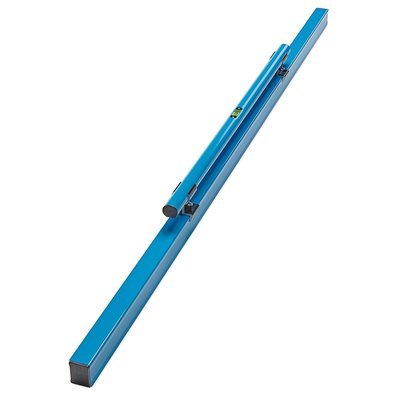
Aluminum screed board strikes off excess concrete level with your forms. Essential for smooth, even slabs.
Check Aluminum Screed Boards on Amazon → -
Hand Finishing
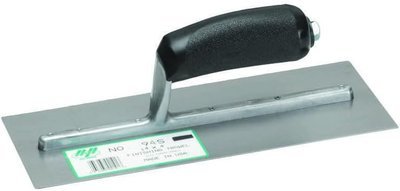
High-carbon steel trowel produces a hard, smooth finish once bleed water evaporates. Standard tool for every pour.
Check Concrete Trowels on Amazon → -
Knee Protection
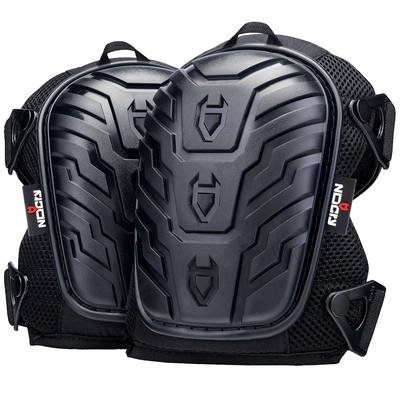
Heavy-duty gel knee pads protect your joints during long finishing hours on wet concrete and kneeling work.
Check NoCry Knee Pads on Amazon → -
Eye & Face Safety

ANSI Z87.1 approved safety glasses block alkaline wet concrete splashes before they reach your eyes.
Check NoCry Safety Glasses on Amazon →