Calculate concrete volume in cubic feet (and cubic yards) for any rectangular or custom-shaped pour.
Cubic Feet vs Cubic Yards -- When to Use Which
Cubic feet and cubic yards measure the same thing -- volume -- but at different scales. Choose the right unit for your project:
- Use cubic feet when: Buying bagged concrete (bag yield is listed in cu ft), small projects under 1 cu yd, sonotube and footing math, mixing concrete by hand in a wheelbarrow.
- Use cubic yards when: Ordering ready-mix delivery (plants quote by the yard), large pours over 1 cubic yard, comparing concrete cost estimates from contractors.
The conversion is simple: 27 cubic feet = 1 cubic yard. A 10×10 patio at 4 inches thick is 33.3 cubic feet OR 1.23 cubic yards -- same volume, different unit.
Cubic Feet Quick Reference
| Slab Size (4-inch depth) | Cubic Feet | Cubic Yards | 80lb Bags (w/ buffer) |
|---|---|---|---|
| 3×3 ft | 3.0 | 0.11 | 6 |
| 5×5 ft | 8.33 | 0.31 | 16 |
| 10×10 ft | 33.3 | 1.23 | 62 |
| 10×15 ft | 50.0 | 1.85 | 92 |
| 15×15 ft | 75.0 | 2.78 | 138 |
| 20×20 ft | 133.3 | 4.94 | 244 |
Bag Yield in Cubic Feet
Concrete bags yield different volumes when mixed with water. Knowing the cubic-feet yield per bag lets you order exactly the right number without doing yardage conversion:
| Bag Size | Yield (cu ft) | Bags per cu yd (raw) | Bags per cu yd (with 10%) |
|---|---|---|---|
| 40 lb | 0.30 | 90 | 99 |
| 60 lb | 0.45 | 60 | 66 |
| 80 lb | 0.60 | 45 | 50 |
Cubic Feet for Non-Slab Pours
Not every concrete pour is a rectangular slab. Common project shapes and their cubic-feet math:
- Sonotube column: π × radius² × depth, all in feet. A 10-inch sonotube at 4 ft deep = 3.14 × 0.417² × 4 = 2.18 cu ft.
- Strip footing: Same as a slab -- length × width × depth. A 20-ft footing × 18 in wide × 12 in deep = 20 × 1.5 × 1.0 = 30 cu ft.
- Stair step: Calculate each step as a rectangle, then sum. A 3-step stair with 36-inch wide × 11-inch tread × 7-inch riser averages 8-10 cu ft total.
- Curb or edge beam: length × width × depth. A 20-ft curb × 6 in wide × 6 in tall = 20 × 0.5 × 0.5 = 5 cu ft.
For complex pour shapes (L-shape patios, irregular driveways), break the area into rectangles and circles, calculate each section separately, then add the cubic feet together. Apply the 10% buffer to the total -- not to each section individually.
Quick Verification Method
After calculating cubic feet, do a sanity check before ordering. Multiply your cubic feet by 0.037 -- the result should match your cubic yards within 0.05. If the numbers do not match, recheck your inch-to-foot conversion on the thickness measurement. Most calculation errors come from forgetting to divide depth in inches by 12 to get feet.
Cubic Feet Conversion FAQ
How many cubic feet of concrete do I need?+
Multiply length × width × depth, all in feet (convert depth from inches by dividing by 12). The result is cubic feet. For a 10×10 patio at 4 inches thick: 10 × 10 × 0.333 = 33.3 cubic feet. Always add 10% buffer for wastage: 33.3 × 1.10 = 36.7 cubic feet to actually order.
How many cubic feet are in a cubic yard?+
One cubic yard equals 27 cubic feet. The conversion: a cubic yard is 3 feet × 3 feet × 3 feet = 27 cubic feet. So to convert cubic feet to cubic yards, divide by 27.
How many cubic feet does an 80lb bag of concrete make?+
An 80 lb bag of pre-mixed concrete yields approximately 0.60 cubic feet when mixed with water. A 60 lb bag yields about 0.45 cu ft. A 40 lb bag yields about 0.30 cu ft. These are standard yields for Quikrete and Sakrete.
How do I calculate cubic feet for a circular pour?+
Use the formula: π × radius² × depth (all in feet). For a 10-inch sonotube (radius = 5 inches = 0.417 ft) at 4 feet deep: 3.14 × 0.417² × 4 = 2.18 cubic feet. With 10% buffer, order 2.4 cubic feet (4 bags of 80lb).
What is the difference between cubic feet and square feet?+
Square feet measures area (length × width). Cubic feet measures volume (length × width × depth). A 10×10 ft patio is 100 square feet of surface area, but the volume depends on slab thickness. At 4 inches deep that 100 sq ft becomes 33.3 cubic feet of concrete.
Affiliate Disclosure: As an Amazon Associate, this site earns from qualifying purchases. Links on this page may earn a small commission at no extra cost to you.
Recommended Jobsite Tools
-
Leveling & Screeding
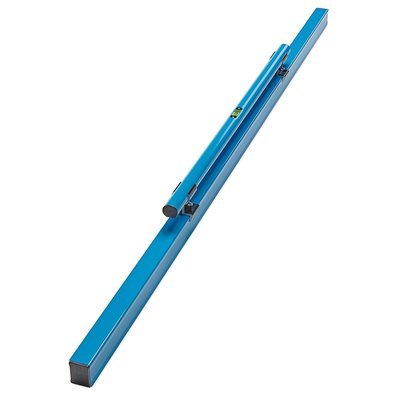
Aluminum screed board strikes off excess concrete level with your forms. Essential for smooth, even slabs.
Check Aluminum Screed Boards on Amazon → -
Hand Finishing
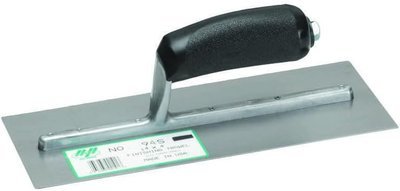
High-carbon steel trowel produces a hard, smooth finish once bleed water evaporates. Standard tool for every pour.
Check Concrete Trowels on Amazon → -
Knee Protection
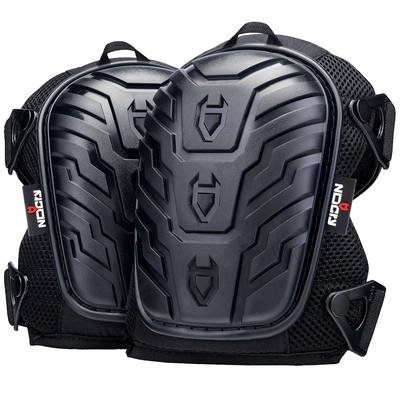
Heavy-duty gel knee pads protect your joints during long finishing hours on wet concrete and kneeling work.
Check NoCry Knee Pads on Amazon → -
Eye & Face Safety

ANSI Z87.1 approved safety glasses block alkaline wet concrete splashes before they reach your eyes.
Check NoCry Safety Glasses on Amazon →