Wall Thickness by Height
| Application | Min Thickness | Recommended | Reinforcement |
|---|---|---|---|
| Sidewalk / Walkway | 3.5" | 4" | Optional fiber |
| Patio | 4" | 4" | Mesh recommended |
| Residential Driveway | 4" | 5" | Mesh or rebar grid |
| Garage Floor | 4" | 5-6" | Rebar grid required |
| RV/Truck Pad | 6" | 6-8" | Heavy rebar grid |
| Shed Foundation (small) | 4" | 4" | Mesh |
| Pool Deck | 4" | 4-5" | Mesh + control joints |
| Hot Tub Pad | 4" | 6" | Rebar grid |
For freeze-thaw climates (Northeast, Midwest, Mountain West), add 1 inch to the recommended thickness. Always check your local building code -- some jurisdictions require 6" minimum for driveways regardless of use.
Retaining Wall Build Checklist
- Excavate to depth. Slab thickness + base depth + 2" for forms = total dig depth. For a 4" slab on 4" base, dig 10" below final grade.
- Compact subgrade. Native soil should be compacted to 95% before adding base. Don't skip this on clay or recently disturbed soil.
- Lay 4" of crushed stone or roadbase. Compact in 2" lifts. 95% compaction is the target.
- Set forms. 2x4 lumber for 3.5" slabs, 2x6 for 5" slabs. Stake every 4 feet. Check for level and proper slope (¼" per foot away from buildings).
- Place vapor barrier and reinforcement. 6 mil poly under interior slabs. Wire mesh or rebar grid raised 1.5-2" off the base on chairs.
- Pour and screed. Pour from far end working back. Screed level with the forms using a 2x4. Don't over-work the surface.
- Float, edge, and joint. Bull float once water sheen disappears. Edge the perimeter with an edging tool. Cut control joints every 8-10 feet.
- Final finish and cure. Broom finish for traction or trowel for smooth. Cover with plastic for 7 days minimum, lightly mist daily.
- Wait before loading. Foot traffic 24-48 hours. Vehicles 7 days. Heavy equipment 28 days.
Why Is Retaining Wall Block Not the Same as Standard CMU?
A retaining wall block and a standard concrete block solve different problems, and swapping one for the other is the single most common way a DIY wall ends up leaning three winters later. Standard CMU is designed to carry vertical load down a straight wall. Retaining block is designed to resist a horizontal shove from saturated soil, which is a completely different force.
That difference shows up in the geometry. Segmental retaining wall units are solid or partially cored, wedge-shaped or lipped so each course sets back a degree or two into the hill, and they interlock without mortar. Standard 8x8x16 CMU is hollow, square, mortared, and has no setback at all. A mortared CMU retaining wall needs a reinforced footing, vertical rebar, and grouted cores to do the same job a dry-stacked segmental wall does out of the box.
- Segmental retaining wall (SRW) block. Typically 12 in wide x 8 in deep x 6 in high face. Dry-stacked, no mortar, built-in setback. Roughly 2 blocks per square foot of wall face.
- Standard 8x8x16 CMU. 1.125 blocks per square foot of wall face. Needs mortar, footing, rebar and grouted cores if it is holding back soil.
- Large-format SRW. 18 in or 24 in face units for walls over 4 ft. Fewer units, heavier lift, usually needs equipment.
Two rules that save walls. Bury the first course: one tenth of the finished wall height, minimum one full course below grade. And backfill the first foot behind the wall with clean angular drainage stone, not the soil you dug out. Water pressure, not soil weight, is what pushes most failed walls over.
If you are actually building a mortared block wall rather than a retaining wall, the block count, mortar bag count and rebar spacing are different. Use the concrete block calculator for that, and the gravel base calculator for the drainage stone behind this one.
What Are the Design Rules for a Retaining Wall?
For every 1 foot of wall height, the base width should be at least 1/8 of the height. A 4-foot wall needs a base at least 6 inches wide. Taller walls need proportionally wider bases to resist soil pressure.
Most segmental retaining walls should lean back into the slope at 1 inch per foot of height. A 3-foot wall leans back 3 inches. This "batter" counteracts the soil pressure pushing against the wall face.
Most retaining wall failures are caused by water pressure, not soil pressure. Install a 6-inch layer of clean gravel behind the wall and use perforated pipe at the base to drain water away. Without drainage, hydrostatic pressure will push the wall over.
Most municipalities require a permit for retaining walls over 3 or 4 feet tall. Walls over 4 feet should be engineered by a professional. DIY segmental block walls are generally safe up to 3 feet without engineering -- check your local code.
Which Retaining Wall Material Should You Use?
| Material | Cost per Sq Ft | Max DIY Height | Lifespan | Best For |
|---|---|---|---|---|
| Segmental block (Allan, Versa-Lok) | $15-$35 | 3-4 ft | 50+ yrs | Landscape, yard terracing |
| Concrete CMU block | $20-$40 | 3 ft (DIY) | 50+ yrs | Structural, heavy load |
| Poured concrete | $30-$60 | Hire out | 50+ yrs | Commercial, engineered |
| Pressure-treated timber | $10-$20 | 4 ft | 20-30 yrs | Budget, garden beds |
| Natural stone | $25-$80 | 3 ft | 100+ yrs | Decorative, premium look |
Retaining Wall FAQ
How many cinder blocks do I need for a 100 sq ft wall?+
For a 100 sq ft wall using standard 8×8×16 blocks, you need approximately 113 blocks before waste. Add 10% waste (11 blocks) for a total of 124 blocks. Also order about 3 bags of mortar mix (one bag covers 40-50 blocks).
How many concrete blocks do I need for a wall?+
Divide the total square footage of your wall by the face area of one block. A standard 8×8×16 block has a face area of 0.89 sq ft (accounting for mortar joints), so you need 1.13 blocks per square foot. Multiply by 1.10 for 10% waste on corners and cuts. A 20-foot long by 4-foot tall wall = 80 sq ft × 1.13 × 1.10 = 99 blocks.
Can I build a retaining wall from standard CMU?+
Only with a reinforced footing, vertical rebar, and grouted cores designed for the soil load. Dry-stacked segmental retaining wall block is engineered for that horizontal push out of the box. A mortared CMU wall holding back soil is a structural element, not a weekend project.
How tall can a retaining wall be before it needs an engineer?+
Most jurisdictions set the trigger at 4 feet of exposed height, measured from the bottom of the footing in some codes. Surcharge loads such as a driveway or slope above the wall can drop that threshold. Check with your building department before you dig.
Affiliate Disclosure: As an Amazon Associate, this site earns from qualifying purchases. Links on this page may earn a small commission at no extra cost to you.
Recommended Jobsite Tools
-
Leveling & Screeding
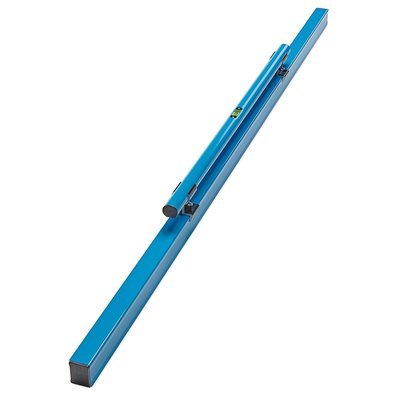
Aluminum screed board strikes off excess concrete level with your forms. Essential for smooth, even slabs.
Check Aluminum Screed Boards on Amazon → -
Hand Finishing
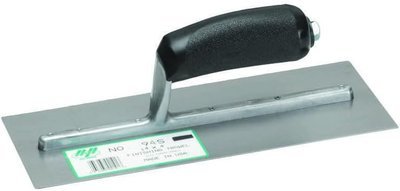
High-carbon steel trowel produces a hard, smooth finish once bleed water evaporates. Standard tool for every pour.
Check Concrete Trowels on Amazon → -
Knee Protection
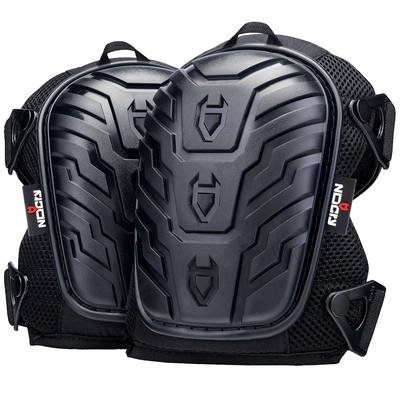
Heavy-duty gel knee pads protect your joints during long finishing hours on wet concrete and kneeling work.
Check NoCry Knee Pads on Amazon → -
Eye & Face Safety

ANSI Z87.1 approved safety glasses block alkaline wet concrete splashes before they reach your eyes.
Check NoCry Safety Glasses on Amazon →