
Calculate exact cement, sand, gravel, and water for 1:2:3, 1:2:4, and custom mix ratios -- with built-in waste factor.
Common Mix Ratios -- What Each One Is For
Concrete mix ratios are written as cement:sand:aggregate. The numbers are parts by volume. A 1:2:3 mix is 1 part Portland cement, 2 parts sand, and 3 parts gravel.
| Ratio | PSI | Use For | Avoid For |
|---|---|---|---|
| 1:1.5:3 | 4000 PSI | Structural columns, beams, suspended slabs | Overkill for residential slabs |
| 1:2:3 | 3000 PSI | Driveways, slabs, sidewalks (most common DIY) | Heavy load applications |
| 1:2:4 | 2500 PSI | Footings, foundations, residential walls | Surfaces requiring abrasion resistance |
| 1:3:6 | 2000 PSI | Mass concrete fill, non-structural | Anything load-bearing |
Water-Cement Ratio -- The Strength Killer
The water-cement ratio is by weight, not volume. For a 94 lb bag of Portland cement, you need 47 lbs of water for a 0.5 ratio -- that is about 5.6 gallons. The lower the ratio, the stronger the concrete:
- 0.40 ratio: Maximum strength, hard to work with, requires plasticizer
- 0.45 ratio: High strength, professional pours, structural applications
- 0.50 ratio: Standard DIY mix, good workability, full strength
- 0.60 ratio: Easy to work, 25% strength loss
- 0.70+ ratio: Soup. Will crack and crumble. Do not pour.
Every gallon of extra water beyond the spec reduces strength by about 5 percent. The mix should look like thick oatmeal, not pancake batter.
Hand Mixing vs Machine Mixing
For projects under 1 cubic yard, a wheelbarrow and mortar hoe work fine. For 1 to 5 cubic yards, rent an electric mixer ($35-55 per day) to ensure even mixing. Over 5 yards, hand-mixing is impractical -- the first batch will start setting before you finish the last one. Order ready-mix delivery instead.
Mix Ratio Cheat Sheet for Common Projects
Use this quick reference when planning your mix. The numbers are parts by volume -- measured in 5-gallon buckets, wheelbarrows, or shovel-loads (consistent across all parts).
- Sidewalks and patios: 1:2:3 ratio (1 cement : 2 sand : 3 gravel) -- produces standard 3000 PSI residential concrete adequate for foot traffic and light vehicle loads.
- Driveways: 1:2:3 minimum, 1:1.5:3 preferred -- driveways supporting heavy vehicles benefit from the stronger 4000 PSI mix that resists cracking from repeated load cycles.
- Footings and foundations: 1:2:4 ratio works for most residential applications because footings are typically reinforced with rebar that handles tension loads.
- Setting fence posts: Use 1:3:5 fast-set or pre-mixed Quikrete Fast-Setting -- strength is less critical than rapid set time.
- Mass fill (non-structural): 1:3:6 ratio is acceptable for void-filling, low-load fill, or backfill applications where strength is not a concern.
Pre-Mixed Bags vs Mix-from-Scratch
For most DIY projects, pre-mixed bags from Quikrete or Sakrete are the right choice -- they contain Portland cement, sand, and aggregate already proportioned to a 3000 PSI mix. You only add water. This eliminates the most common mix mistake: bad ratios.
Mix from scratch (Portland cement plus separately purchased sand and gravel) only makes sense when:
- You need a custom strength (4000 PSI structural or 5000 PSI high-strength) not available pre-mixed
- You are pouring 3+ cubic yards (raw materials become cheaper at volume)
- You want a specific aggregate type (decorative pea gravel, recycled concrete, lightweight aggregate)
- You are an experienced contractor with access to bulk material delivery
For most residential pours under 2 cubic yards, pre-mixed bags save time, prevent ratio errors, and produce reliable results. The price difference (about 15-20 percent more than raw materials) is worth the consistency.
Concrete Mix Ratio FAQ
What is the best mix ratio for a concrete driveway?+
Use a 1:2:3 ratio for 3000 PSI concrete. This is the standard for residential driveways and provides enough strength for vehicles up to half-ton trucks. For driveways with heavy trucks or RVs, step up to 1:1.5:3 (4000 PSI).
How much water do I add per bag of concrete?+
For an 80 lb bag of pre-mixed concrete, add 3 quarts (0.75 gallons) of water. For mixing from scratch with a 94 lb bag of Portland cement, you need approximately 5.6 gallons of water at a 0.5 water-cement ratio.
Can I add more water if my concrete is too stiff?+
No. Adding water after initial mixing destroys the chemical bonds. If the mix is too stiff, you started with the wrong ratio -- discard and remix. Adding water cuts final strength by 25-50 percent.
What is the difference between 3000 PSI and 4000 PSI concrete?+
3000 PSI is the standard for residential slabs, driveways, and walkways. 4000 PSI is used for structural elements like columns, beams, and suspended floors. The 4000 PSI mix uses more cement (1:1.5:3 vs 1:2:3) and costs about 15-20 percent more.
Do I need to use Portland cement specifically?+
Yes for true mix-from-scratch projects. Type I/II Portland cement is the standard. Pre-mixed bags from Quikrete or Sakrete already contain the right proportions of Portland cement, sand, and aggregate -- for those, you only add water.
Affiliate Disclosure: As an Amazon Associate, this site earns from qualifying purchases. Links on this page may earn a small commission at no extra cost to you.
Recommended Jobsite Tools
-
Leveling & Screeding
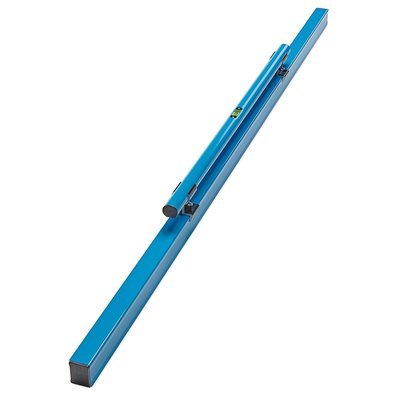
Aluminum screed board strikes off excess concrete level with your forms. Essential for smooth, even slabs.
Check Aluminum Screed Boards on Amazon → -
Hand Finishing
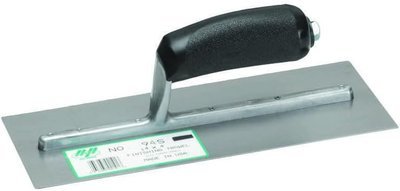
High-carbon steel trowel produces a hard, smooth finish once bleed water evaporates. Standard tool for every pour.
Check Concrete Trowels on Amazon → -
Knee Protection

Heavy-duty gel knee pads protect your joints during long finishing hours on wet concrete and kneeling work.
Check NoCry Knee Pads on Amazon → -
Eye & Face Safety

ANSI Z87.1 approved safety glasses block alkaline wet concrete splashes before they reach your eyes.
Check NoCry Safety Glasses on Amazon →