
Driveway Calculator
Driveway Results
| Passenger cars | 4 inches min |
| SUVs and trucks | 5 inches |
| RVs and boats | 6 inches |
| Commercial vehicles | 6-8 inches |
Always specify 4000 PSI minimum for driveways. In states with cold winters and road salt (freeze-thaw cycles), specify air-entrained 4000 PSI -- the microscopic air bubbles allow water to expand during freezing without cracking the surface. Never accept 3000 PSI concrete for a driveway regardless of what a contractor suggests to save cost.
This is the most debated topic in residential driveway construction. The honest answer: rebar wins for driveways, wire mesh wins for thin flatwork.
For a 4-inch driveway slab, use #4 rebar (½ inch diameter) at 18-inch centers in both directions, placed at mid-depth using 2-inch wire chairs. Rebar provides significantly more tensile strength than wire mesh and prevents wide cracks from forming when the ground settles. Wire mesh (6×6-W1.4×W1.4) is acceptable for patios and walkways that only carry foot traffic, but is undersized for vehicle loads. Fiber-reinforced concrete (poly fibers added to the mix) can supplement either -- it reduces surface cracking but does not replace structural reinforcement.
Driveway Size Reference
| Driveway Type | Dimensions | Cubic Yards (4") | Cubic Yards (5") | Installed Cost |
|---|---|---|---|---|
| Single car, short | 9 × 20 ft | 2.22 | 2.78 | $1,800-$3,600 |
| Single car, standard | 10 × 30 ft | 3.70 | 4.63 | $2,960-$5,920 |
| Double car (most common) | 20 × 30 ft | 7.41 | 9.26 | $5,930-$11,860 |
| Triple car wide | 30 × 30 ft | 11.11 | 13.89 | $8,890-$17,780 |
Concrete vs Asphalt Driveway -- Full Cost Comparison
- Installed cost: $6-$12 per sq ft
- 20×30 ft driveway: $3,600-$7,200
- Lifespan: 30-50 years
- Maintenance: Seal every 3-5 years
- Can handle heavy vehicles immediately after cure
- Light-colored -- reflects heat in summer
- Susceptible to oil stains and salt damage
- Installed cost: $3-$6 per sq ft
- 20×30 ft driveway: $1,800-$3,600
- Lifespan: 15-30 years
- Maintenance: Seal every 1-3 years
- Wait 3-5 days before driving on it
- Dark -- softens in extreme heat
- Easier and cheaper to repair
For cold climates with hard winters: concrete holds up better long-term but is more expensive upfront. For hot climates: asphalt can soften and rut in extreme heat. For most homeowners who plan to stay in their home 10+ years, concrete delivers better value over the full ownership period despite the higher installation cost.
Control Joints and Finishing
Every concrete driveway needs control joints -- saw-cut or tooled grooves that give the slab a controlled place to crack. Space them no more than 10 feet apart in each direction. A 20×30 foot driveway needs at least 2 longitudinal joints and 2 transverse joints. Without control joints, driveways crack randomly within 2-3 years of curing -- not if, but when.
Broom finish is the standard driveway texture -- drag a stiff bristle broom across the surface after screeding while the concrete is still wet. This creates slip-resistant texture that channels water. Apply a curing compound or keep the surface wet for 7 days after the pour. Do not seal a new driveway until it has cured for at least 28 days.
Driveway Delivery: Truck vs Short Load
| 2026 Truck | Max Payload | Concrete Capacity | Bag Capacity (80lb) |
|---|---|---|---|
| Toyota Tacoma (standard) | 1,521 lbs | ~0.38 cu yd | ~18 bags |
| Toyota Tacoma (i-FORCE MAX) | 1,705 lbs | ~0.42 cu yd | ~21 bags |
| Ford F-150 (PowerBoost Hybrid) | 1,740 lbs | ~0.43 cu yd | ~21 bags |
| Ford F-150 (5.0L V8) | 2,235 lbs | ~0.55 cu yd | ~27 bags |
| Ford F-150 (3.5L EcoBoost) | 2,440 lbs | ~0.61 cu yd | ~30 bags |
| 3/4-ton (F-250, Silverado 2500) | 3,500+ lbs | ~0.87 cu yd | ~43 bags |
*Payload values from 2026 manufacturer specs. Your actual payload is on the door-jamb sticker. Add accessories (toolbox, bedliner) and that number drops 100-300 lbs. A driver and passenger count against payload too.
If your project needs more than 1 cubic yard (4,000 lbs), pickup-truck delivery requires multiple trips. For 2+ cubic yards, ready-mix delivery is almost always cheaper than the gas, time, and suspension wear of multiple bag runs. Most ready-mix trucks deliver 8-10 yards in one trip.
Driveway FAQ
How long before I can drive on new concrete?+
Wait at least 7 days before driving on new concrete. Keep heavy vehicles such as moving trucks and RVs off for the full 28-day cure period.
Do I need expansion joints in a driveway?+
Yes. Install fiber expansion joints where the driveway meets the garage slab or sidewalk. Saw-cut control joints every 8-10 feet direct cracking to straight lines.
How thick should the gravel base be under a driveway?+
A 4-inch compacted crushed stone base is standard for residential driveways. In clay or expansive soils, increase to 6-8 inches and consider a geotextile fabric beneath the gravel.
Can I pour my own concrete driveway?+
Small driveway sections up to about 5 cubic yards are possible for an experienced DIYer with 3-4 helpers. Larger pours are high-risk because concrete sets while you are still finishing. Most homeowners hire a contractor.
Affiliate Disclosure: As an Amazon Associate, this site earns from qualifying purchases. Links on this page may earn a small commission at no extra cost to you.
Recommended Jobsite Tools
-
Leveling & Screeding
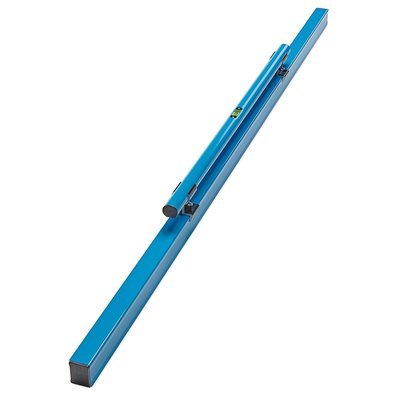
Aluminum screed board strikes off excess concrete level with your forms. Essential for smooth, even slabs.
Check Aluminum Screed Boards on Amazon → -
Hand Finishing
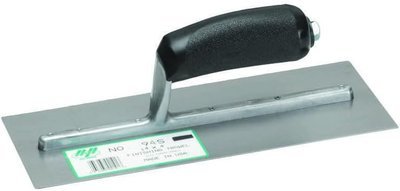
High-carbon steel trowel produces a hard, smooth finish once bleed water evaporates. Standard tool for every pour.
Check Concrete Trowels on Amazon → -
Knee Protection
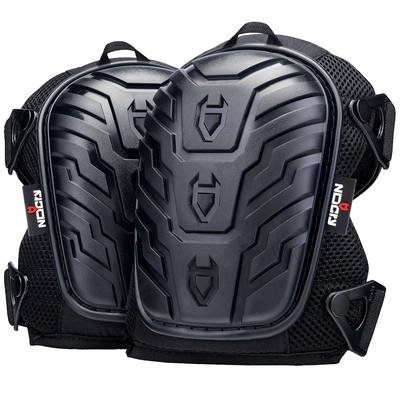
Heavy-duty gel knee pads protect your joints during long finishing hours on wet concrete and kneeling work.
Check NoCry Knee Pads on Amazon → -
Eye & Face Safety

ANSI Z87.1 approved safety glasses block alkaline wet concrete splashes before they reach your eyes.
Check NoCry Safety Glasses on Amazon →