Calculate the exact number of rebar pieces, total linear feet, and overlap requirements for any slab, footing, or wall.
Rebar Sizing Guide -- Which Size for What
| Size | Diameter | Weight per ft | Use For |
|---|---|---|---|
| #3 | 3/8 inch | 0.376 lbs | Light slabs, shed floors, sidewalks |
| #4 | 1/2 inch | 0.668 lbs | Most residential slabs and footings |
| #5 | 5/8 inch | 1.043 lbs | Driveways, garage floors, heavy patios |
| #6 | 3/4 inch | 1.502 lbs | Structural columns, RV pads, foundations |
Rebar Spacing Standards -- ACI 318
ACI 318 (American Concrete Institute Building Code) sets rebar spacing standards based on slab thickness and load. The general rule: rebar should be spaced at intervals no greater than 3× the slab thickness, up to a maximum of 18 inches.
- 12-inch grid: Heavy load applications -- RV pads, hot tub pads, structural slabs over 6 inches thick
- 16-inch grid: Driveways, garage floors, slabs supporting permanent structures
- 18-inch grid: Standard residential slabs, patios, walkways (most common)
- 24-inch grid: Light-duty applications, shed floors, decorative slabs
For walls, vertical rebar is typically placed at 12 to 24-inch centers depending on wall height and lateral load. Add horizontal rebar at the same spacing for two-way reinforcement.
Lap Splice and Overlap Requirements
When rebar pieces meet, they must overlap (lap splice) by a code-required amount to transfer load between bars. The standard rule: lap splice = 40× bar diameter. Round up for safety.
- #3 rebar: 15-inch overlap minimum
- #4 rebar: 20-inch overlap minimum
- #5 rebar: 25-inch overlap minimum
- #6 rebar: 30-inch overlap minimum
Tie laps with rebar tie wire at 3 points -- both ends and center. Crossings of perpendicular bars should be tied at every 4th intersection minimum, every intersection in seismic or high-load zones.
Buying Rebar -- Sticks vs Coil vs Cut
Rebar is sold three ways. 20-foot sticks are the standard at home improvement stores -- cheapest per foot but require a rebar cutter or hacksaw to size. Pre-cut to length from a steel supplier costs more per foot but eliminates field cutting on large jobs. Coil rebar uncoils into long lengths but requires a straightener machine -- best for commercial concrete contractors, not DIY.
For a 20×20 foot slab with 18-inch grid #4 rebar, expect to need 14-15 twenty-foot sticks. At $8-12 per stick, total rebar cost runs $112-180 plus tie wire and chairs.
Wire Mesh vs Rebar -- When Each Works
Welded wire mesh (typically 6×6 W1.4×W1.4) is acceptable for non-load-bearing residential slabs like sidewalks and small patios. It is cheaper and easier to install than rebar -- sheets are 5×10 feet and roll out flat. The downside: mesh sags under foot traffic during pouring, often ending up at the bottom of the slab where it provides no benefit. For any slab supporting a vehicle, structure, or concentrated load, use rebar.
Rebar Spacing FAQ
Do I need rebar in a 4-inch slab?+
For non-load-bearing residential slabs (sidewalks, simple patios), 6×6 wire mesh is acceptable. For driveways, garage floors, and any slab supporting a permanent structure (hot tub, shed, gazebo), use #4 rebar at 18-inch centers minimum. Wire mesh sags during pouring and provides less crack control than rebar.
How far apart should rebar be in a slab?+
For residential slabs the standard is 18-inch on-center spacing in both directions, creating a grid pattern. Heavy-load applications like RV pads use 12-inch spacing. ACI 318 requires spacing not greater than 3× slab thickness or 18 inches, whichever is less.
Should rebar go on top or bottom of the slab?+
Neither. Rebar must be in the center of the slab thickness, elevated off the ground using rebar chairs (1.5 to 2 inches above gravel base for a 4-inch slab). Rebar resting on the ground provides almost zero structural benefit because cracks form from the bottom.
How much rebar do I need for a 20x20 foot slab?+
At 18-inch grid spacing using #4 rebar, you need approximately 280-300 linear feet (15 twenty-foot sticks) for a 20×20 slab including 10 percent waste and lap overlap. Use the calculator above for exact numbers.
What is the difference between #4 and #5 rebar?+
#4 rebar is 1/2 inch diameter and weighs 0.668 lbs per foot. #5 rebar is 5/8 inch diameter and weighs 1.043 lbs per foot -- about 56 percent heavier. #5 is used for driveways and heavier loads; #4 is the standard for most residential slabs.
Affiliate Disclosure: As an Amazon Associate, this site earns from qualifying purchases. Links on this page may earn a small commission at no extra cost to you.
Recommended Jobsite Tools
-
Leveling & Screeding
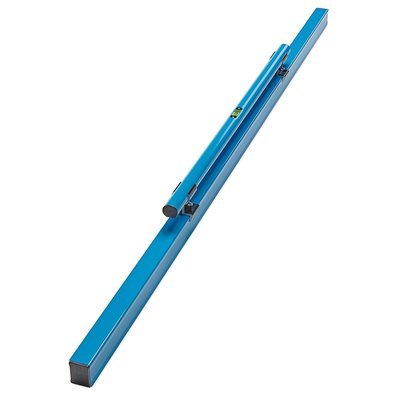
Aluminum screed board strikes off excess concrete level with your forms. Essential for smooth, even slabs.
Check Aluminum Screed Boards on Amazon → -
Hand Finishing
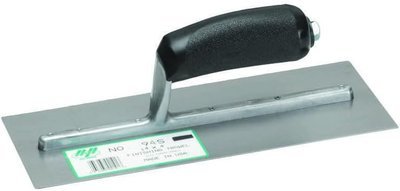
High-carbon steel trowel produces a hard, smooth finish once bleed water evaporates. Standard tool for every pour.
Check Concrete Trowels on Amazon → -
Knee Protection
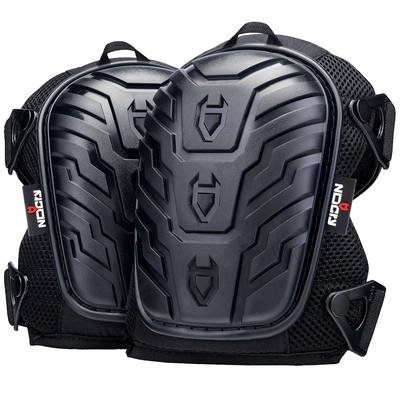
Heavy-duty gel knee pads protect your joints during long finishing hours on wet concrete and kneeling work.
Check NoCry Knee Pads on Amazon → -
Eye & Face Safety

ANSI Z87.1 approved safety glasses block alkaline wet concrete splashes before they reach your eyes.
Check NoCry Safety Glasses on Amazon →