Sidewalk Calculator
Driveway Results
| Passenger cars | 4 inches min |
| SUVs and trucks | 5 inches |
| RVs and boats | 6 inches |
| Commercial vehicles | 6-8 inches |
Always specify 4000 PSI minimum for driveways. In states with cold winters and road salt (freeze-thaw cycles), specify air-entrained 4000 PSI -- the microscopic air bubbles allow water to expand during freezing without cracking the surface. Never accept 3000 PSI concrete for a driveway regardless of what a contractor suggests to save cost.
This is the most debated topic in residential driveway construction. The honest answer: rebar wins for driveways, wire mesh wins for thin flatwork.
For a 4-inch driveway slab, use #4 rebar (½ inch diameter) at 18-inch centers in both directions, placed at mid-depth using 2-inch wire chairs. Rebar provides significantly more tensile strength than wire mesh and prevents wide cracks from forming when the ground settles. Wire mesh (6×6-W1.4×W1.4) is acceptable for patios and walkways that only carry foot traffic, but is undersized for vehicle loads. Fiber-reinforced concrete (poly fibers added to the mix) can supplement either -- it reduces surface cracking but does not replace structural reinforcement.
How Wide and Thick Should a Sidewalk Be?
| Application | Width | Thickness | Joint Spacing |
|---|---|---|---|
| Garden path (single) | 2.5-3 ft | 3.5" | Every 4 ft |
| Residential walkway | 3-4 ft | 4" | Every 5 ft |
| Public sidewalk (ADA) | 5 ft min | 4" | Every 5 ft |
| Wheelchair-accessible | 5 ft | 4" | Every 5 ft |
| Driveway crossing | match driveway | 5-6" | Every 4 ft |
| Pool deck | 4 ft min | 4" | Every 6 ft |
ADA standards require 5 ft minimum width for new public sidewalks. Local building code may differ -- always verify before pouring.
Why Do Sidewalk Control Joints Matter?
Concrete shrinks as it cures, and continues to expand and contract with temperature. Without control joints, that movement creates random cracks. With proper joints, the cracks happen at planned locations and stay invisible.
Rule of thumb: Joint spacing in feet should equal slab thickness in inches × 2 to 3. A 4-inch sidewalk should have joints every 8 to 12 feet -- most homeowners go with 5-foot spacing for guaranteed no-crack performance.
Joint types: Tooled joints (cut into wet concrete with a jointing tool) are easiest. Sawed joints (cut with a wet saw within 24 hours of pour) give cleaner lines. Both work -- tooled joints are easier for DIY.
Expansion joints: Where the sidewalk meets a building, driveway, or another concrete slab, use a ½-inch fiber expansion strip -- this allows independent movement and prevents cracking at the junction.
What Does Code Require for a Residential Sidewalk?
Most residential codes require public sidewalks to be at least 36 inches wide for ADA accessibility compliance. Private walkways have fewer restrictions -- 24 to 36 inches is standard for residential paths. Thickness is typically 3.5 to 4 inches for foot traffic. In freeze-thaw climates use 4 inches minimum with air-entrained concrete (specify this to your ready-mix supplier).
Install control joints every 4-5 feet along the length. Slope the surface away from the house at 1/8 inch per foot so water sheds off the edge rather than pooling against the foundation. This small drainage slope makes a significant difference in freeze-thaw climates where standing water cycles into ice and expands existing cracks.
Sidewalk Concrete FAQ
How thick should a concrete driveway be?+
Residential driveways should be 4 inches minimum. Five inches is recommended for standard passenger vehicles. Six inches is required for heavy vehicles, RVs, or commercial use.
How much does a concrete driveway cost?+
Professionally installed concrete driveways cost $6-$12 per square foot on average. A typical two-car driveway (20×40 ft) runs $4,800-$9,600 installed.
Do I need rebar in a concrete driveway?+
Yes. Use #4 rebar (½ inch diameter) at 18-inch centers in both directions, placed at mid-depth using wire chairs. Rebar provides tensile strength and dramatically reduces cracking from vehicle loads.
What PSI concrete is required for a driveway?+
Use 4000 PSI minimum for residential driveways. In freeze-thaw climates, specify air-entrained 4000 PSI to prevent surface scaling from ice and de-icing salts.
Affiliate Disclosure: As an Amazon Associate, this site earns from qualifying purchases. Links on this page may earn a small commission at no extra cost to you.
Recommended Jobsite Tools
-
Leveling & Screeding
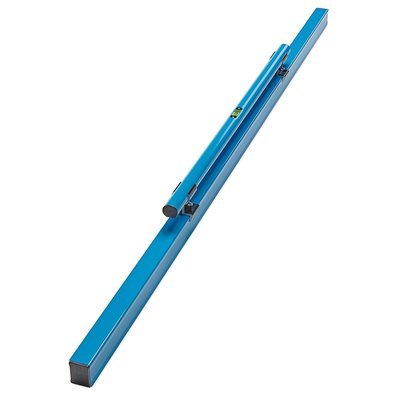
Aluminum screed board strikes off excess concrete level with your forms. Essential for smooth, even slabs.
Check Aluminum Screed Boards on Amazon → -
Hand Finishing
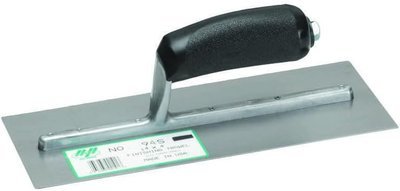
High-carbon steel trowel produces a hard, smooth finish once bleed water evaporates. Standard tool for every pour.
Check Concrete Trowels on Amazon → -
Knee Protection
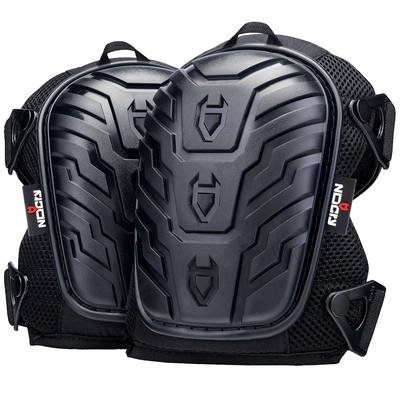
Heavy-duty gel knee pads protect your joints during long finishing hours on wet concrete and kneeling work.
Check NoCry Knee Pads on Amazon → -
Eye & Face Safety

ANSI Z87.1 approved safety glasses block alkaline wet concrete splashes before they reach your eyes.
Check NoCry Safety Glasses on Amazon →