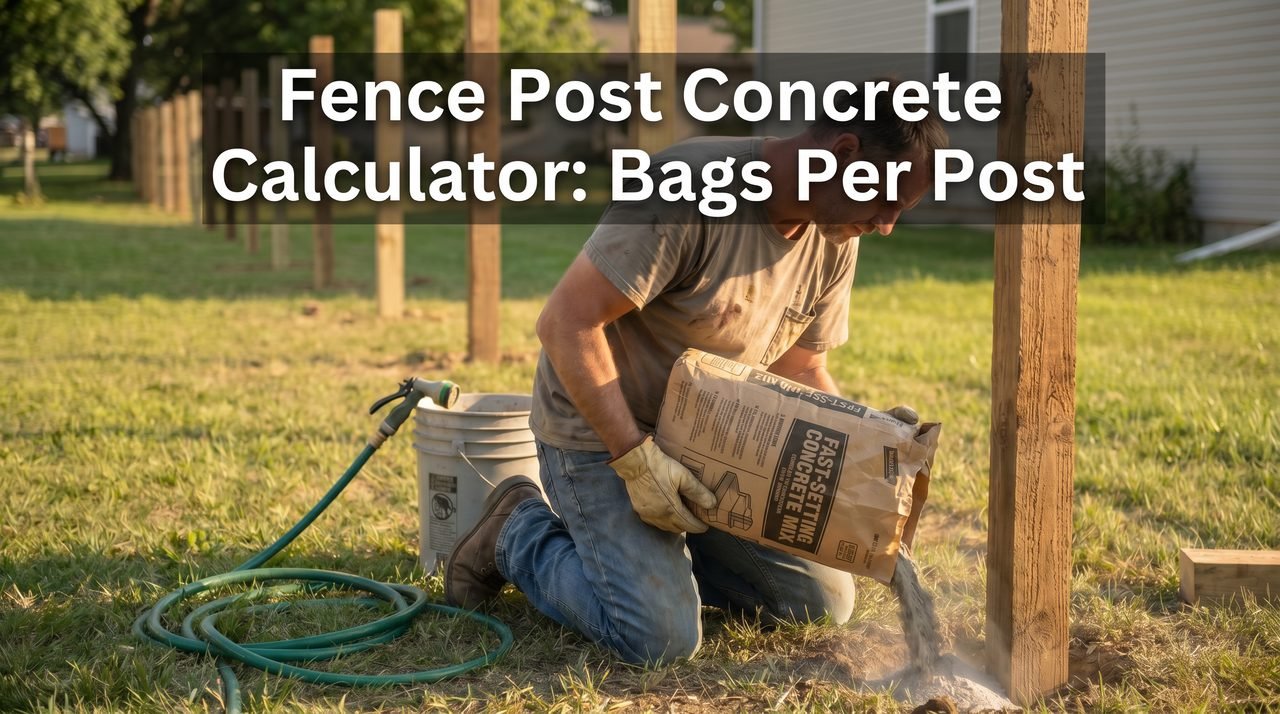
Fence Post Calculator
Fence Post Results
| Hole Diameter | Depth 24" | Depth 36" | Depth 48" |
|---|---|---|---|
| 8 inches | 0.5 bags | 0.7 bags | 1 bag |
| 10 inches | 0.8 bags | 1 bag | 1.5 bags |
| 12 inches | 1 bag | 1.5 bags | 2 bags |
Rent a two-man power auger from Home Depot or Lowes for $80-$120/day -- it's worth every penny. Hand digging post holes is exhausting and produces uneven walls that don't grip concrete as well. The hole should be 3× the post width: 8-10 inches for a 4×4 post, 12 inches for a 6×6. Flare the bottom of each hole slightly wider -- this "bell" shape resists frost heave in cold climates.
Always use pressure-treated lumber rated for ground contact -- look for the UC4B or UC4C stamp on the tag. UC4A is only rated for above-ground use. Standard #2 pine will rot in 3-5 years in direct soil contact regardless of paint or sealant. Western red cedar and black locust are naturally rot-resistant alternatives but cost significantly more. Never set untreated wood directly in concrete.
Place post, pour dry mix into hole, add water slowly. No mixing required. Sets in 20-40 minutes. You can attach rails in 4 hours. Best for most DIY fence projects. Works in wet conditions too -- just reduce added water.
Mix in a wheelbarrow and pour wet. Takes 24-48 hours to set. Better for gate posts and corner posts under heavy load. Use 3000 PSI concrete for all posts. Check for plumb before it sets -- you have about 30 minutes to make adjustments.
Fence Post Concrete -- Bags Per Post Reference
| Post Size | Hole Diameter | 24" deep | 36" deep | 48" deep |
|---|---|---|---|---|
| 4×4 post | 9-10" | 1 bag | 2 bags | 2 bags |
| 6×6 post | 12" | 1 bag | 2 bags | 3 bags |
| Round 4" post | 10" | 1 bag | 2 bags | 2 bags |
| Gate post 6×6 | 16" | 2 bags | 3 bags | 4 bags |
Rule of thumb: the hole should be 3× the post diameter and at least 1/3 the post height deep. For a 6-foot fence panel, the posts should be 9 feet long with 3 feet buried. In frost-prone areas, always dig below the local frost line -- a post set above the frost line will heave out of the ground over winter.
Quikrete Fast-Setting Concrete is the best choice for fence posts. Pour the dry mix directly into the hole, add water on top, and it sets in 20-40 minutes. You do not need to mix it first. This lets you set 10-15 posts in a day and hang panels the next morning.
How Much Concrete for a 4x4 Post -- Quick Reference
The most-searched fence post question, answered with exact bag counts:
| 4x4 Hole Depth | Hole Diameter | 50 lb Fast-Set | 80 lb Standard |
|---|---|---|---|
| 24 inch | 10 inch | 2 bags | 1 bag |
| 36 inch (standard) | 10 inch | 3 bags | 2 bags |
| 48 inch (frost line) | 12 inch | 5 bags | 3 bags |
For a standard 6-foot privacy fence with 4x4 posts at 8-foot spacing, a 100-foot fence run needs about 13 posts. At 36-inch hole depth with 80lb concrete, you need 26 bags of concrete total.
Fence Post FAQ
How many fence posts do I need?+
Divide the total fence length by the post spacing, then add 1. For 100 feet at 8-foot spacing: 100 ÷ 8 = 12.5, rounded up to 13, plus 1 = 14 line posts. Add extra posts for corners and gates.
How many bags of concrete do I need per fence post?+
A 10-inch hole at 36 inches deep needs about 1 bag of Quikrete Fast-Setting 50lb. An 8-inch hole at 24 inches needs about half a bag. Our calculator computes this exactly from your hole dimensions.
How deep should fence posts be set?+
The standard rule is one-third of the total post length in the ground, with a 24-inch minimum. In freeze-thaw climates, set posts below the local frost line -- typically 36-48 inches.
Can I use Quikrete Fast-Setting concrete without mixing?+
Yes -- this is the recommended method for fence posts. Place the post in the hole, pour dry Quikrete around it, then slowly add water. The concrete sets firm in 20-40 minutes with no mixing required.
What diameter hole do I need for fence posts?+
The hole should be 3 times the post width. For a 4×4 post, dig an 8-10 inch hole. For a 6×6 post, use a 12-inch hole. Power augers make digging consistent and efficient.
What is the standard fence post spacing?+
8 feet is the most common spacing for wood privacy fences, matching standard 8-foot fence panel lengths. Use 6 feet for vinyl or composite fences. Rail fences sometimes use 10-foot spacing.
How do I prevent fence posts from rotting?+
Always use pressure-treated lumber rated for ground contact, stamped UC4B or UC4C. Slope the concrete collar away from the post so water drains away. Never set untreated wood directly in concrete or soil.
How long until I can attach fence rails after setting posts?+
With Quikrete Fast-Setting, you can attach rails after 4 hours. Standard concrete needs 24-48 hours minimum. In cold weather, allow more time -- concrete cures slowly below 50°F.
Affiliate Disclosure: As an Amazon Associate, this site earns from qualifying purchases. Links on this page may earn a small commission at no extra cost to you.
Recommended Jobsite Tools
-
Leveling & Screeding
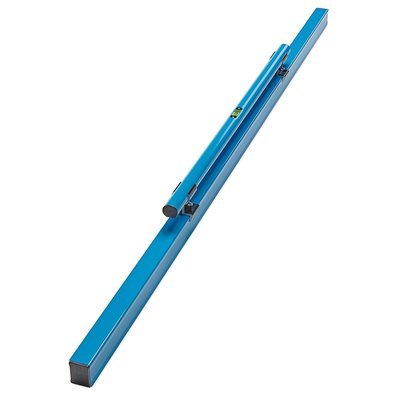
Aluminum screed board strikes off excess concrete level with your forms. Essential for smooth, even slabs.
Check Aluminum Screed Boards on Amazon → -
Hand Finishing
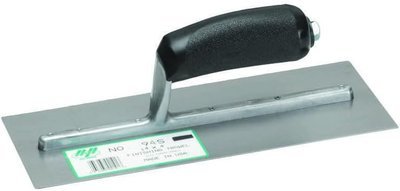
High-carbon steel trowel produces a hard, smooth finish once bleed water evaporates. Standard tool for every pour.
Check Concrete Trowels on Amazon → -
Knee Protection
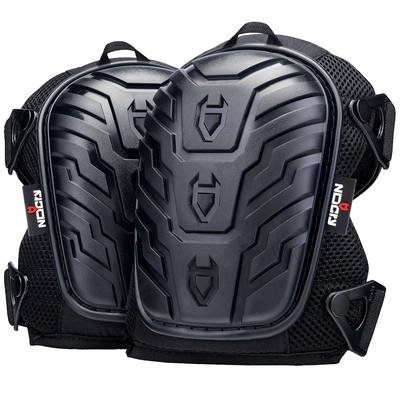
Heavy-duty gel knee pads protect your joints during long finishing hours on wet concrete and kneeling work.
Check NoCry Knee Pads on Amazon → -
Eye & Face Safety

ANSI Z87.1 approved safety glasses block alkaline wet concrete splashes before they reach your eyes.
Check NoCry Safety Glasses on Amazon →