Circular Calculator
Slab Results
| Application | Min Thickness | Recommended | PSI |
|---|---|---|---|
| Sidewalk / Walkway | 3" | 4" | 3000 |
| Backyard Patio | 3.5" | 4" | 3000-4000 |
| Residential Driveway | 4" | 5" | 4000 |
| Garage Floor | 4" | 5-6" | 4000 |
| Heavy Equipment Pad | 6" | 8" | 5000 |
Circular Concrete Project Reference
| Project | Diameter | Depth | Cubic Feet | 80lb Bags |
|---|---|---|---|---|
| Fire pit pad | 5 ft | 4" | 6.54 | 11 |
| Hot tub pad | 8 ft | 6" | 25.13 | 42 |
| Patio circle | 12 ft | 4" | 37.70 | 63 |
| Pier footing (deck) | 12" | 36" | 2.36 | 4 |
| Pier footing (heavy) | 16" | 48" | 5.59 | 10 |
| Mailbox base | 18" | 24" | 3.53 | 6 |
| Tree ring (12 ft outer, 4 ft inner) | annular | 4" | 33.51 | 56 |
All values include +10% waste factor. 80 lb bag yields 0.60 cu ft. For 60 lb bags, multiply 80 lb count by 1.33.
The Circular Concrete Formula
For any circular concrete project, the volume formula is π × radius² × depth. The radius is half the diameter. All three dimensions must be in the same units -- usually feet for depth conversions.
Example: A 10-foot diameter circular patio at 4 inches thick = π × 5² × (4 ÷ 12) = 3.14159 × 25 × 0.333 = 26.18 cubic feet, or 0.97 cubic yards. Add 10% waste for a final order of 1.07 cubic yards.
For pier footings or sonotubes: Use the diameter of the tube and the full depth of the hole. A 12-inch sonotube at 36 inches deep = π × 0.5² × 3 = 2.36 cubic feet (about 4 bags of 80lb concrete).
For tree rings or annular shapes: Calculate the outer circle, then subtract the inner circle. Outer area − inner area × depth = volume. Our calculator above handles this automatically.
Round vs Square: When to Use Each
Round or cylindrical concrete projects are more common than most homeowners realize. Deck footings (sonotubes), fire pit pads, circular patios, pier foundations, and some pool applications all require the circular volume formula: π × radius² × depth.
The most common mistake is using the rectangular formula on sonotube footings. A 12-inch sonotube at 36 inches deep has a volume of 2.36 cubic feet -- if you accidentally calculated it as a 1×1×3 foot rectangular footing you would get 3 cubic feet, causing you to buy 27% too many bags.
For a quick field estimate: (diameter in inches)² × depth in feet × 0.0082 = cubic feet. Example: 12" tube × 12" × 3ft depth × 0.0082 = 2.36 cu ft. Divide by 0.60 = 4 bags of 80lb concrete.
Round Concrete -- The Formula Explained
The formula for a cylinder is π × radius² × height. For a 12-inch sonotube at 36 inches deep: π × 0.5² × 3 = 2.36 cubic feet per footing. Divide by 0.60 for 80lb bag count = 4 bags. The most common error is using diameter instead of radius -- always halve the diameter first. A 12-inch tube has a 6-inch radius, or 0.5 feet in decimal.
Round slabs such as fire pit pads, circular patios, and fountain bases use the same formula. Measure across the widest point to get diameter, halve it for radius, then calculate π × radius² × thickness in feet. Add 10% for waste on any round pour because forming a circle always creates more edge waste than a square or rectangle of the same area.
Why Does a Circular Slab Need Different Math?
Rectangular slabs use simple length times width. Circular pours use pi times radius squared - and that pi factor catches first-time DIYers off guard. A 10-foot diameter circle looks small, but it holds 0.97 cubic yards of concrete at 4 inches thick. Most people estimate about 60% of that and run short mid-pour.
The real trap is the formwork. Circular forms require flexible bender board or metal landscape edging bent into a smooth curve. Plywood panels create a polygon, not a circle, and the corners collect weak spots where cracks start. Use 1/4-inch Masonite hardboard soaked in water for 24 hours - it bends cleanly to any radius over 2 feet without snapping.
Pro tip from Joe R.: When pouring a circular pad for a fire pit or fountain base, slope the surface 1/8 inch per foot away from center. This prevents water pooling that causes spalling in freeze-thaw climates. Our calculator does not add this slope factor - you need to add approximately 3% extra volume manually for sloped circular pours.
Circular Concrete FAQ
How many bags of concrete per square foot at 4 inches thick?+
At 4 inches thick, each square foot needs 0.333 cubic feet of concrete. An 80lb bag covers about 1.8 square feet, so roughly 1 bag per 1.8 sq ft.
Can I pour concrete in cold weather?+
Do not pour concrete when temperatures are below 40°F. The curing reaction slows dramatically in cold and can freeze entirely, losing up to 50% of design strength.
How do I calculate concrete for a round slab?+
Use pi x radius squared x depth, all in feet. A 12 ft diameter pad at 4 inches is 3.1416 x 6 x 6 x 0.333 = 37.7 cubic feet, which is 1.40 cubic yards. Measure the radius, not the diameter, or you will order four times too much.
How many bags of concrete for a 10 ft diameter circle at 4 inches?+
A 10 ft circle is 78.5 square feet. At 4 inches that is 26.2 cubic feet, or 44 bags of 80 lb before waste. Add 10 percent and buy 49. Round forms flex under load, so overfilling slightly is cheaper than a second trip.
Affiliate Disclosure: As an Amazon Associate, this site earns from qualifying purchases. Links on this page may earn a small commission at no extra cost to you.
Recommended Jobsite Tools
-
Leveling & Screeding
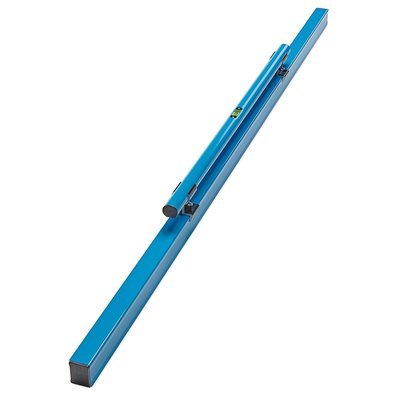
Aluminum screed board strikes off excess concrete level with your forms. Essential for smooth, even slabs.
Check Aluminum Screed Boards on Amazon → -
Hand Finishing
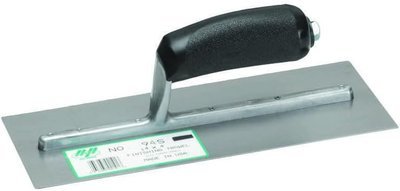
High-carbon steel trowel produces a hard, smooth finish once bleed water evaporates. Standard tool for every pour.
Check Concrete Trowels on Amazon → -
Knee Protection
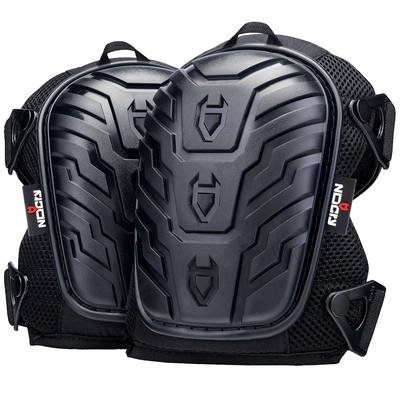
Heavy-duty gel knee pads protect your joints during long finishing hours on wet concrete and kneeling work.
Check NoCry Knee Pads on Amazon → -
Eye & Face Safety

ANSI Z87.1 approved safety glasses block alkaline wet concrete splashes before they reach your eyes.
Check NoCry Safety Glasses on Amazon →