House Square Footage Calculator
Area Results
| Unit | Equals | Use Case |
|---|---|---|
| 1 square yard | 9 sq ft | Carpet, turf |
| 1 square meter | 10.76 sq ft | International specs |
| 1 acre | 43,560 sq ft | Land measurement |
| 1 hectare | 107,639 sq ft | Agriculture |
| 12×12 room | 144 sq ft | Standard bedroom |
House Square Footage in Real Projects
An L-shaped or irregular room is just two or more rectangles. Divide it into simple sections, measure each one separately, and add the totals. Our calculator lets you add as many areas as you need. For rooms with closets, always measure the closet separately and include it -- carpet and flooring installers charge by total square footage including closets and alcoves.
Square footage is the starting point for almost every outdoor material calculation. Once you have the area in square feet, you can convert to cubic yards for concrete or gravel (multiply by depth in feet, then divide by 27), or directly use it to estimate mulch, sod, seed, and pavers.
Measuring a Whole House vs Measuring One Room
Measuring one room is arithmetic. Measuring a whole house is bookkeeping. You are not just multiplying length by width, you are deciding what counts, what gets excluded, and which face of the wall you measure from. Get those three calls wrong and the number is off by ten percent before you touch a calculator.
Two rules do most of the work. First, gross living area is measured from the exterior face of the exterior walls, not from inside the drywall. A 40 by 50 foot footprint with 6 inch walls measures 2,000 sq ft outside and roughly 1,950 sq ft inside. Appraisers use the outside number. Second, a space only counts as living area when it is finished, heated, and reachable from the rest of the house without stepping outdoors. That is why a finished bonus room over the garage usually counts and a finished basement usually does not.
If what you actually need is a plain area figure for paint, flooring, sod, or a pour, skip the living-area rules and use our square footage calculator, which carries the room-size tables, paint coverage, and flooring waste factors. For the concrete side of the job, take the number to the concrete slab calculator.
What Counts as Living Square Footage?
- Finished, heated rooms above grade
- Hallways and stairwells (counted on each level)
- Closets, pantries, and storage rooms
- Finished bonus rooms with permanent stairs
- Heated/cooled finished basements (sometimes -- see notes)
- Unfinished basements (even if heated)
- Garages (attached or detached)
- Open-air porches, decks, balconies
- Sheds and outbuildings
- Areas with ceilings under 7 feet
- Unfinished attic space
Important caveat for basements: Most appraisers list finished basement space separately from above-grade square footage, even when fully finished and heated. A 2,000 sq ft above-grade home with a 1,000 sq ft finished basement is typically listed as "2,000 sq ft + 1,000 finished basement" -- not 3,000 sq ft. This affects comparable-sales analysis significantly.
Sources of Truth for Your Home's Square Footage
| Source | Method | Reliability |
|---|---|---|
| Tax assessor record | Drive-by exterior measurement | Often outdated or wrong by 5-15% |
| Original blueprints/plans | Architect's gross calculation | Doesn't reflect renovations |
| Current MLS listing | Listing agent (varies) | May be inflated |
| Professional appraisal | ANSI Z765 measurement | Most accurate |
| Your own measurement | Room-by-room interior | Accurate if methodical |
Why Accurate House Square Footage Matters
- Real estate listings: Listed at the wrong size, you either overprice (no offers) or underprice (lost equity). A 100 sq ft error at $200/sq ft is $20,000.
- Property taxes: Most jurisdictions assess based on county records. If your record overstates your size, you're overpaying tax. Check your county's website annually.
- Insurance: Replacement cost coverage scales with square footage. Inaccurate figures lead to underinsurance or wasted premiums.
- HVAC sizing: Heating and cooling capacity is calculated per square foot. Wrong size = oversized unit (humidity issues) or undersized (high bills).
- Flooring estimates: Whole-house flooring quotes use square footage as the base. A 5% error on 2,000 sq ft is 100 extra sq ft of materials and labor.
- Energy audits and rebate programs: Many state energy programs require accurate square footage to determine rebate eligibility.
House Square Footage vs Room Square Footage
Measuring a single room is simple math. Measuring an entire house is an appraisal skill. The ANSI Z765 standard defines exactly what counts as "gross living area" and what does not. Finished basements, enclosed porches, bonus rooms above garages, and attic spaces all have specific rules about when they count toward your home's total square footage.
The most common mistake homeowners make is including the garage. Standard attached garages never count toward living area. Neither do unfinished basements, even if they have carpet. Below-grade living space (any room where the floor is below ground level on any side) gets listed separately from above-grade square footage in appraisals.
Why this matters for concrete projects: When you are quoting a garage floor or basement slab, the square footage you measured for real estate purposes is wrong for concrete purposes. Concrete measurements use exterior wall dimensions (outside-to-outside), while real estate square footage uses interior wall dimensions (inside-to-inside). The difference is typically 6-10% more concrete than you would estimate from the floor plan.
House Square Footage FAQ
How many square feet are in a square yard?+
There are exactly 9 square feet in 1 square yard (3 ft × 3 ft). This is the key conversion for flooring, carpet, and turf sold by the yard.
How do I calculate the square footage of a circle?+
Use the formula π × radius². For a 12-foot diameter circle: radius = 6 ft, so π × 36 = 113.1 square feet. Select the Circle shape in our calculator above.
What is the square footage of a 12×12 room?+
A 12×12 room equals 144 square feet. When buying flooring, add 10% for waste and cuts: 144 × 1.10 = 158.4. Buy 160 square feet to be safe.
How much area does a gallon of paint cover?+
One gallon covers 350-400 square feet per coat on smooth drywall. Plan for 2 coats when changing colors. Add 10% for touch-ups and trim work.
How many gallons of paint do I need for a 12x12 room?+
For a standard 12×12 room with 8-foot ceilings, the wall area is roughly 384 sq ft (4 walls × 12 ft × 8 ft = 384). At 350-400 sq ft per gallon coverage, that's 1 gallon for one coat or 2 gallons for two coats. Most color changes need 2 coats. Add a quart for touch-ups.
How do I calculate square footage for L-shaped rooms?+
Divide the L-shape into two rectangles by drawing a straight line where the L meets. Calculate each rectangle separately (length × width), then add the two totals. Our calculator's 'Add Another Area' button does this automatically -- enter each rectangle and the total updates instantly.
How many boxes of vinyl plank flooring for 200 square feet?+
Most LVP boxes cover 23-30 sq ft. For a 200 sq ft room with 10% waste (220 sq ft total), you'd need 8 boxes at 30 sq ft each, or 10 boxes at 23 sq ft each. Always check the exact box yield on the product label and buy from a single production run for color consistency.
What's the square footage of a 2-car garage?+
A standard 2-car garage is 22 × 22 ft = 484 sq ft. A larger 24 × 24 ft 2-car garage is 576 sq ft. For epoxy floor coatings or concrete sealers, add 10% waste: 484 × 1.10 = 533 sq ft of coating to purchase. Our calculator handles this conversion automatically.
How do I convert square feet to cubic yards for concrete?+
Multiply square feet by depth in feet, then divide by 27. Example: a 200 sq ft patio at 4 inches thick = 200 × 0.333 ÷ 27 = 2.47 cubic yards. For depth in inches, divide inches by 12 first to get feet. Our concrete calculator handles this conversion in one step.
How many tiles do I need for a 100 sq ft floor?+
For 12×12 inch tiles (1 sq ft each), you need 100 tiles plus 10-15% waste = 110-115 tiles. For 18×18 inch tiles (2.25 sq ft each), divide 100 by 2.25 = 45 tiles plus waste = 50-52 tiles. Diagonal layouts need 15-20% waste due to more cuts at edges.
Affiliate Disclosure: As an Amazon Associate, this site earns from qualifying purchases. Links on this page may earn a small commission at no extra cost to you.
Recommended Jobsite Tools
-
Leveling & Screeding
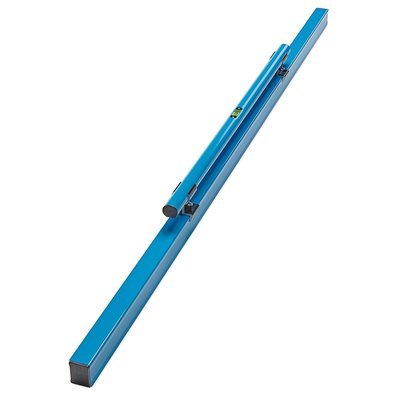
Aluminum screed board strikes off excess concrete level with your forms. Essential for smooth, even slabs.
Check Aluminum Screed Boards on Amazon → -
Hand Finishing
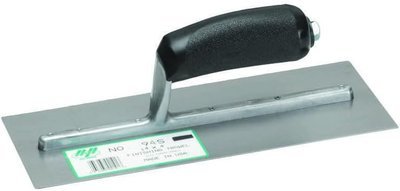
High-carbon steel trowel produces a hard, smooth finish once bleed water evaporates. Standard tool for every pour.
Check Concrete Trowels on Amazon → -
Knee Protection
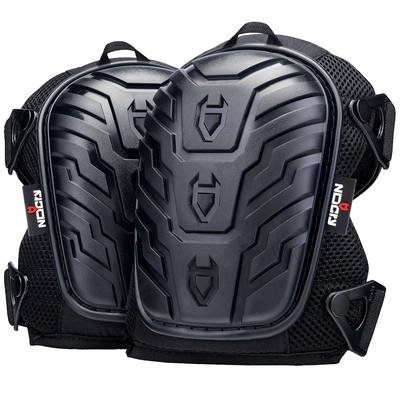
Heavy-duty gel knee pads protect your joints during long finishing hours on wet concrete and kneeling work.
Check NoCry Knee Pads on Amazon → -
Eye & Face Safety

ANSI Z87.1 approved safety glasses block alkaline wet concrete splashes before they reach your eyes.
Check NoCry Safety Glasses on Amazon →