Block Wall Thickness by Height
| Application | Min Thickness | Recommended | Reinforcement |
|---|---|---|---|
| Sidewalk / Walkway | 3.5" | 4" | Optional fiber |
| Patio | 4" | 4" | Mesh recommended |
| Residential Driveway | 4" | 5" | Mesh or rebar grid |
| Garage Floor | 4" | 5-6" | Rebar grid required |
| RV/Truck Pad | 6" | 6-8" | Heavy rebar grid |
| Shed Foundation (small) | 4" | 4" | Mesh |
| Pool Deck | 4" | 4-5" | Mesh + control joints |
| Hot Tub Pad | 4" | 6" | Rebar grid |
For freeze-thaw climates (Northeast, Midwest, Mountain West), add 1 inch to the recommended thickness. Always check your local building code -- some jurisdictions require 6" minimum for driveways regardless of use.
Block Laying Checklist
- Excavate to depth. Slab thickness + base depth + 2" for forms = total dig depth. For a 4" slab on 4" base, dig 10" below final grade.
- Compact subgrade. Native soil should be compacted to 95% before adding base. Don't skip this on clay or recently disturbed soil.
- Lay 4" of crushed stone or roadbase. Compact in 2" lifts. 95% compaction is the target.
- Set forms. 2x4 lumber for 3.5" slabs, 2x6 for 5" slabs. Stake every 4 feet. Check for level and proper slope (¼" per foot away from buildings).
- Place vapor barrier and reinforcement. 6 mil poly under interior slabs. Wire mesh or rebar grid raised 1.5-2" off the base on chairs.
- Pour and screed. Pour from far end working back. Screed level with the forms using a 2x4. Don't over-work the surface.
- Float, edge, and joint. Bull float once water sheen disappears. Edge the perimeter with an edging tool. Cut control joints every 8-10 feet.
- Final finish and cure. Broom finish for traction or trowel for smooth. Cover with plastic for 7 days minimum, lightly mist daily.
- Wait before loading. Foot traffic 24-48 hours. Vehicles 7 days. Heavy equipment 28 days.
Concrete Block Types and Coverage
| Block Type | Nominal Size | Face Area | Blocks per Sq Ft | Common Use | Est. Price Each |
|---|---|---|---|---|---|
| Standard CMU (8×8×16) | 8" × 8" × 16" | 0.89 sq ft | 1.13 | Walls, foundations, retaining | $2.50-$4.00 |
| Half Block (8×8×8) | 8" × 8" × 8" | 0.44 sq ft | 2.25 | Corners, ends, openings | $2.00-$3.00 |
| Jumbo (12×8×16) | 12" × 8" × 16" | 0.89 sq ft | 1.13 | Load-bearing walls, thicker walls | $4.00-$6.50 |
| Partition (4×8×16) | 4" × 8" × 16" | 0.89 sq ft | 1.13 | Interior non-load-bearing | $1.50-$2.50 |
| Split Face (8×8×16) | 8" × 8" × 16" | 0.89 sq ft | 1.13 | Decorative retaining walls, landscape | $5.00-$8.00 |
| Retaining Wall Block | 6"-8" × varies | varies | ~1.0 | Landscape retaining walls, edging | $3.00-$7.00 |
Mortar Requirements for Concrete Block
One 70-pound bag of mortar mix covers approximately 40-50 standard 8×8×16 blocks. Standard joint thickness is ⅜ inch. Thicker joints (½ inch) use more mortar and are common for rough or irregular block work. Always estimate 10-15% extra for dropped mortar and waste.
Concrete Block Laying Tips for DIYers
Every course error multiplies upward. The first course is everything. Use a level on every block. If a block sits high, grind the mortar bed down. If it sits low, add mortar. Check level in both directions -- side to side and front to back.
Stagger vertical joints by half a block length in each course. This interlocking pattern gives the wall its strength. Stack bond (vertical joints aligned) is much weaker and requires additional reinforcement to achieve the same strength.
Install control joints every 20-25 feet in straight walls, and at all corners, openings, and changes in wall height. Control joints prevent random cracking -- they give the wall a controlled place to move as it expands and contracts with temperature changes.
For structural walls, fill the hollow cores with concrete grout and rebar every 4-8 feet horizontally and at all corners. For garden or landscape walls under 3 feet, you can leave cores empty. Walls supporting loads must have filled cores.
Concrete Block FAQ
What is the difference between a cinder block and a concrete block?+
Cinder blocks were originally made with cinder aggregate (coal ash) and are no longer manufactured. What most people call a cinder block today is actually a concrete masonry unit (CMU) made from Portland cement, aggregate, and water. The terms are used interchangeably in modern construction, but technically all new blocks are concrete blocks.
How many courses of block equal one foot in height?+
Standard 8x8x16 blocks with 3/8-inch mortar joints stack at exactly 8 inches per course. That means 1.5 courses per foot, or 3 courses per 2 feet. A 4-foot wall requires 6 courses. A 6-foot wall requires 9 courses. This makes planning very simple.
How much does a concrete block wall cost?+
Material cost for standard 8×8×16 CMU blocks runs $2.50-$4.00 per block. A 20×4 ft wall (99 blocks) costs $250-$400 in materials plus about $15 in mortar. Installed cost by a mason runs $10-$15 per sq ft, so that same wall costs $800-$1,200 professionally installed.
How much mortar do I need for concrete blocks?+
One 70-pound bag of mortar mix covers approximately 40-50 standard 8×8×16 blocks using 3/8-inch joints. Add 10-15% for waste. For 100 blocks, order 3 bags. For 200 blocks, order 5-6 bags. Pre-mixed mortar bags are more convenient for small projects; bulk masonry mortar is more economical for large walls.
Affiliate Disclosure: As an Amazon Associate, this site earns from qualifying purchases. Links on this page may earn a small commission at no extra cost to you.
Recommended Jobsite Tools
-
Leveling & Screeding
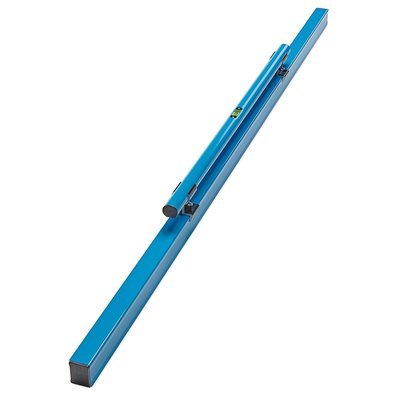
Aluminum screed board strikes off excess concrete level with your forms. Essential for smooth, even slabs.
Check Aluminum Screed Boards on Amazon → -
Hand Finishing
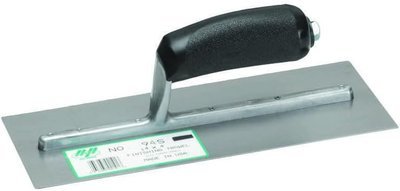
High-carbon steel trowel produces a hard, smooth finish once bleed water evaporates. Standard tool for every pour.
Check Concrete Trowels on Amazon → -
Knee Protection
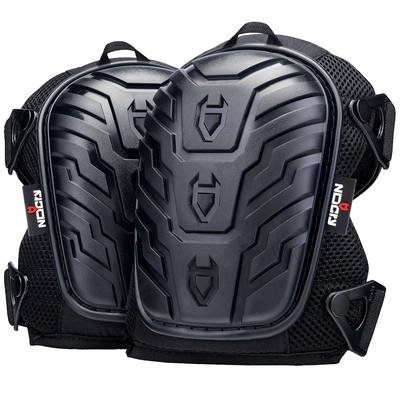
Heavy-duty gel knee pads protect your joints during long finishing hours on wet concrete and kneeling work.
Check NoCry Knee Pads on Amazon → -
Eye & Face Safety

ANSI Z87.1 approved safety glasses block alkaline wet concrete splashes before they reach your eyes.
Check NoCry Safety Glasses on Amazon →