Calculate the total weight of any concrete pour in pounds, tons, or kilograms -- with truck payload reality check.
Concrete Weight Reference Table
| Concrete Type | Weight per Cu Ft | Weight per Cu Yd | Notes |
|---|---|---|---|
| Standard concrete | 150 lbs | 4,050 lbs | Most residential pours, 3000 PSI |
| High-strength (5000 PSI) | 155 lbs | 4,185 lbs | Structural elements, denser aggregate |
| Lightweight concrete | 90-115 lbs | 2,430-3,105 lbs | Insulating fill, expanded aggregate |
| Wet/fresh concrete | 150 lbs | 4,050 lbs | Same as cured -- water stays inside |
| Reinforced concrete | 155-160 lbs | 4,185-4,320 lbs | With rebar weight included |
Why Concrete Weight Matters for Your Project
Most DIYers calculate volume but ignore weight -- and that mistake costs them. Three reasons concrete weight matters:
- Truck payload limits: A standard half-ton pickup carries about 1,500-2,400 lbs. A typical concrete order exceeds that quickly. Loading bags above payload damages your truck and is illegal.
- Subgrade and base requirements: A 4-inch driveway over compacted gravel weighs about 50 lbs per square foot. Soft, uncompacted soil cannot support that weight without settling.
- Structural loads on existing slabs: Adding a 4-inch concrete addition to an existing slab adds 50 lbs per square foot. Over an unreinforced slab or wood framing, that load can cause cracks or failure.
How Many Trips for Bagged Concrete
Each 80-lb bag of concrete yields about 0.6 cubic feet. To pour 1 cubic yard (27 cubic feet), you need about 45 bags weighing 3,600 lbs total. Plus the bags themselves and water you bring along -- easily 4,000 lbs of cargo.
For most half-ton pickups (Tacoma, F-150 standard, Silverado 1500 base), that means 2 to 3 trips. With a properly equipped F-150 EcoBoost or similar 2,400-lb-payload truck, it can be done in 2 trips. The math: 60 bags per trip × 2 trips = enough for 1.3 cubic yards safely.
Concrete vs Other Construction Materials by Weight
| Material | Weight per Cu Yd |
|---|---|
| Concrete (standard) | 4,050 lbs |
| Asphalt | 2,700 lbs |
| Gravel (compacted) | 2,800 lbs |
| Sand (dry) | 2,700 lbs |
| Topsoil | 2,000 lbs |
| Mulch (wood chips) | 400-600 lbs |
Concrete is the heaviest common construction material per cubic yard. This is why ready-mix delivery exists -- a typical truck delivers 8-10 yards (32,000-40,000 lbs) in one trip, something no civilian vehicle can match.
Calculating Weight for Mixed-Depth Pours
Many real-world concrete pours are not uniform thickness. A driveway might be 4 inches at the apron and 6 inches at the curb edge. A patio might thicken to 6 inches where a hot tub will sit. To calculate weight for mixed-depth pours, break the project into rectangles of uniform depth, calculate each volume separately, then sum the results.
Example: A 20×30 foot driveway with a 4-foot wide thickened edge at 6 inches deep, and 4-inch standard depth elsewhere:
- Standard area: 20 × 26 = 520 sq ft × 0.333 ft (4") = 173 cu ft × 150 lbs = 25,950 lbs
- Thickened edge: 20 × 4 = 80 sq ft × 0.5 ft (6") = 40 cu ft × 150 lbs = 6,000 lbs
- Total weight: 31,950 lbs (about 16 tons)
Weight and Subgrade Preparation
Concrete weight matters most for subgrade preparation. Soil bearing capacity varies dramatically -- clay can support 1,500-3,000 PSF (pounds per square foot), sand 2,000-4,000 PSF, gravel 4,000-8,000 PSF. A 4-inch slab applies 50 PSF -- well within any soil capacity. But a 6-inch slab with 3,000 lbs of stored equipment in the center applies much higher localized loads that soft soil cannot handle without settling.
Best practice: compact the subgrade with a plate compactor in 2-inch lifts, install 4-6 inches of compacted gravel base, then pour. This distributes the concrete weight evenly and prevents differential settlement that causes cracks.
Concrete Weight FAQ
How much does a 10x10 concrete slab weigh?+
A 10×10 foot slab at 4 inches thick contains 33.3 cubic feet of concrete. At 150 lbs per cubic foot, that slab weighs 5,000 lbs -- about 2.5 tons. At 6 inches thick the same slab weighs 7,500 lbs.
Can my pickup truck haul a yard of concrete?+
A cubic yard of concrete weighs about 4,050 lbs -- far above any half-ton or 3/4-ton truck payload. Even a heavy-duty F-350 (typical payload 4,000-7,000 lbs) struggles with a full yard. Order ready-mix delivery for any pour over 1 cubic yard.
How much does a 60 lb bag of concrete weigh after mixing?+
After mixing, a 60-lb bag of dry concrete plus water weighs approximately 75-80 lbs. The mixed bag yields about 0.45 cubic feet of concrete weighing roughly 67.5 lbs of pure concrete (the water adds weight but most stays in the mix).
Why is concrete so heavy?+
Concrete is dense because it contains cement, sand, and gravel -- all heavy materials. The aggregate (sand and stone) makes up about 75 percent of the mix and weighs 90-100 lbs per cubic foot on its own. Add cement and water, and the cured product weighs 150 lbs per cubic foot.
Affiliate Disclosure: As an Amazon Associate, this site earns from qualifying purchases. Links on this page may earn a small commission at no extra cost to you.
Recommended Jobsite Tools
-
Leveling & Screeding
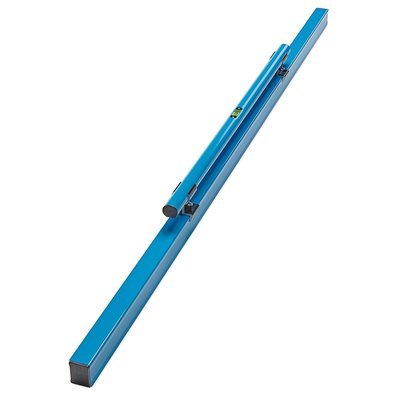
Aluminum screed board strikes off excess concrete level with your forms. Essential for smooth, even slabs.
Check Aluminum Screed Boards on Amazon → -
Hand Finishing
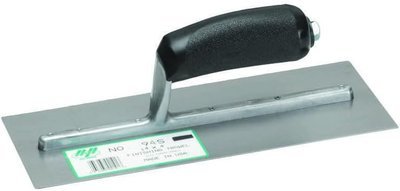
High-carbon steel trowel produces a hard, smooth finish once bleed water evaporates. Standard tool for every pour.
Check Concrete Trowels on Amazon → -
Knee Protection
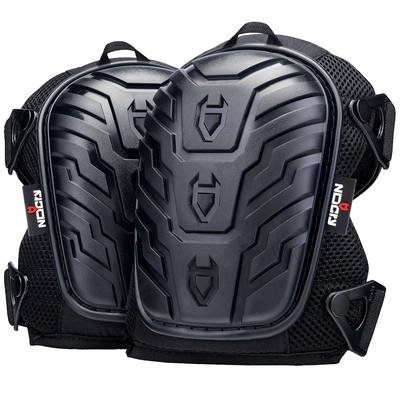
Heavy-duty gel knee pads protect your joints during long finishing hours on wet concrete and kneeling work.
Check NoCry Knee Pads on Amazon → -
Eye & Face Safety

ANSI Z87.1 approved safety glasses block alkaline wet concrete splashes before they reach your eyes.
Check NoCry Safety Glasses on Amazon →