
Slab Size Calculator
Slab Results
| Application | Min Thickness | Recommended | PSI |
|---|---|---|---|
| Sidewalk / Walkway | 3" | 4" | 3000 |
| Backyard Patio | 3.5" | 4" | 3000-4000 |
| Residential Driveway | 4" | 5" | 4000 |
| Garage Floor | 4" | 5-6" | 4000 |
| Heavy Equipment Pad | 6" | 8" | 5000 |
Concrete Slab Thickness by Project
| Application | Min Thickness | Recommended | Reinforcement |
|---|---|---|---|
| Sidewalk / Walkway | 3.5" | 4" | Optional fiber |
| Patio | 4" | 4" | Mesh recommended |
| Residential Driveway | 4" | 5" | Mesh or rebar grid |
| Garage Floor | 4" | 5-6" | Rebar grid required |
| RV/Truck Pad | 6" | 6-8" | Heavy rebar grid |
| Shed Foundation (small) | 4" | 4" | Mesh |
| Pool Deck | 4" | 4-5" | Mesh + control joints |
| Hot Tub Pad | 4" | 6" | Rebar grid |
For freeze-thaw climates (Northeast, Midwest, Mountain West), add 1 inch to the recommended thickness. Always check your local building code -- some jurisdictions require 6" minimum for driveways regardless of use.
Slab Pour Preparation Checklist
- Excavate to depth. Slab thickness + base depth + 2" for forms = total dig depth. For a 4" slab on 4" base, dig 10" below final grade.
- Compact subgrade. Native soil should be compacted to 95% before adding base. Don't skip this on clay or recently disturbed soil.
- Lay 4" of crushed stone or roadbase. Compact in 2" lifts. 95% compaction is the target.
- Set forms. 2x4 lumber for 3.5" slabs, 2x6 for 5" slabs. Stake every 4 feet. Check for level and proper slope (¼" per foot away from buildings).
- Place vapor barrier and reinforcement. 6 mil poly under interior slabs. Wire mesh or rebar grid raised 1.5-2" off the base on chairs.
- Pour and screed. Pour from far end working back. Screed level with the forms using a 2x4. Don't over-work the surface.
- Float, edge, and joint. Bull float once water sheen disappears. Edge the perimeter with an edging tool. Cut control joints every 8-10 feet.
- Final finish and cure. Broom finish for traction or trowel for smooth. Cover with plastic for 7 days minimum, lightly mist daily.
- Wait before loading. Foot traffic 24-48 hours. Vehicles 7 days. Heavy equipment 28 days.
Concrete Slab Thickness Guide
Sidewalks, pathways, patios with light foot traffic only. Minimum code thickness in most jurisdictions. Add 1 inch in freeze-thaw climates.
Standard residential patio, driveway apron, shed floor, walkway. The most common residential pour depth. Use 3,000 PSI mix minimum.
Residential driveway, light vehicle traffic up to 8,000 lbs. Parking a pickup truck, SUV, or delivery van. Use rebar or wire mesh reinforcement.
Garage floors, RV pads, heavy equipment pads. Vehicles over 8,000 lbs. Hot tub pads and anything requiring structural load capacity. Use #4 rebar on 18-inch grid.
Always add 10% to your calculated volume for waste. Concrete hardens quickly once poured -- you cannot add more to a partially-cured slab. Running short mid-pour creates a cold joint that is a structural weakness.
Slab Delivery: Truck vs Short Load
| 2026 Truck | Max Payload | Concrete Capacity | Bag Capacity (80lb) |
|---|---|---|---|
| Toyota Tacoma (standard) | 1,521 lbs | ~0.38 cu yd | ~18 bags |
| Toyota Tacoma (i-FORCE MAX) | 1,705 lbs | ~0.42 cu yd | ~21 bags |
| Ford F-150 (PowerBoost Hybrid) | 1,740 lbs | ~0.43 cu yd | ~21 bags |
| Ford F-150 (5.0L V8) | 2,235 lbs | ~0.55 cu yd | ~27 bags |
| Ford F-150 (3.5L EcoBoost) | 2,440 lbs | ~0.61 cu yd | ~30 bags |
| 3/4-ton (F-250, Silverado 2500) | 3,500+ lbs | ~0.87 cu yd | ~43 bags |
*Payload values from 2026 manufacturer specs. Your actual payload is on the door-jamb sticker. Add accessories (toolbox, bedliner) and that number drops 100-300 lbs. A driver and passenger count against payload too.
If your project needs more than 1 cubic yard (4,000 lbs), pickup-truck delivery requires multiple trips. For 2+ cubic yards, ready-mix delivery is almost always cheaper than the gas, time, and suspension wear of multiple bag runs. Most ready-mix trucks deliver 8-10 yards in one trip.
Slab Reinforcement -- When You Need Rebar
Not every slab needs rebar, but most should have something:
- Sidewalks & small patios: 6x6 wire mesh OR no reinforcement if under 50 sq ft
- Driveways: #4 rebar at 18-inch grid OR 6x6 W2.9 wire mesh elevated 1.5 inches
- Garage floors: #4 rebar at 18-inch grid minimum
- RV pads & hot tub pads: #4 rebar at 12-inch grid (heavier load)
- Foundations: Depends on local code -- typically #4 or #5 rebar at 12-18 inch grid
Use our Rebar Calculator to get exact rebar quantities for any slab dimension.
Quick Reference: Slab Area to Concrete Volume
Calculations below assume a standard 4-inch slab depth and include a 10% waste buffer.
| Slab Size (ft) | Total Area | Cu Yards (w/ 10% waste) | 80lb Bags | 60lb Bags |
|---|---|---|---|---|
| 4′ × 4′ | 16 sq ft | 0.22 cu yd | 10 bags | 13 bags |
| 10′ × 10′ | 100 sq ft | 1.36 cu yd | 61 bags | 82 bags |
| 12′ × 12′ | 144 sq ft | 1.96 cu yd | 88 bags | 117 bags |
| 20′ × 20′ | 400 sq ft | 5.43 cu yd | 245 bags | 326 bags |
Standard Concrete Volume Formulas
Cubic Yards Formula: (Length ft × Width ft × Depth ft) ÷ 27 = Cubic Yards
Pre-Mix Bag Yields:
- One 80lb bag yields 0.60 cubic feet (45 bags = 1 cubic yard)
- One 60lb bag yields 0.45 cubic feet (60 bags = 1 cubic yard)
- One 40lb bag yields 0.30 cubic feet (90 bags = 1 cubic yard)
Concrete Slab Calculator FAQ
What PSI concrete do I need for a residential slab?+
Use 3000 PSI minimum for patios and walkways. Use 4000 PSI for driveways and garage floors. In freeze-thaw climates, specify air-entrained 4000 PSI.
How long does concrete take to cure?+
Concrete reaches about 70% of its design strength in 7 days and full strength at 28 days. Keep the surface moist for the first week for maximum strength.
How do I calculate concrete for a slab?+
Multiply length × width × thickness (all in feet), then divide by 27 for cubic yards. For a 12×12 slab at 4 inches: 12 × 12 × 0.333 ÷ 27 = 1.78 cubic yards.
How many bags of concrete for a 10×10 slab at 4 inches?+
A 10×10 slab at 4 inches thick needs 33.3 cubic feet (1.23 cubic yards). That is 74 bags of 60lb or 56 bags of 80lb concrete -- add 10% for waste.
Affiliate Disclosure: As an Amazon Associate, this site earns from qualifying purchases. Links on this page may earn a small commission at no extra cost to you.
Recommended Jobsite Tools
-
Leveling & Screeding
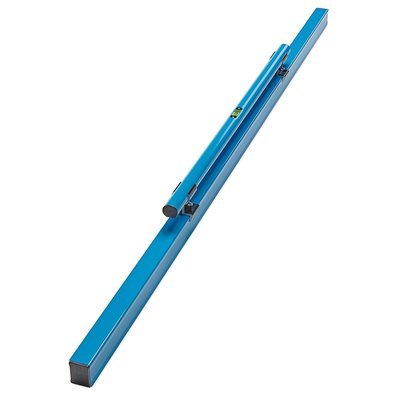
Aluminum screed board strikes off excess concrete level with your forms. Essential for smooth, even slabs.
Check Aluminum Screed Boards on Amazon → -
Hand Finishing
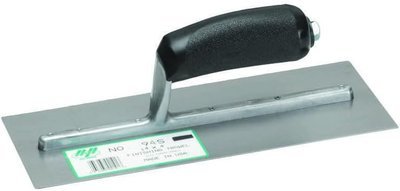
High-carbon steel trowel produces a hard, smooth finish once bleed water evaporates. Standard tool for every pour.
Check Concrete Trowels on Amazon → -
Knee Protection
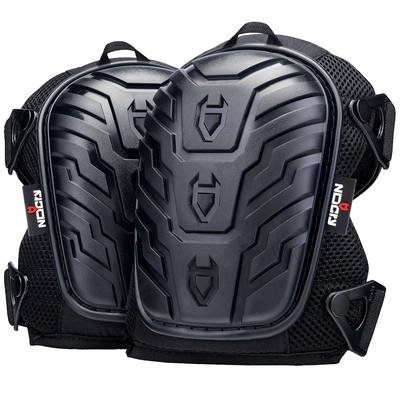
Heavy-duty gel knee pads protect your joints during long finishing hours on wet concrete and kneeling work.
Check NoCry Knee Pads on Amazon → -
Eye & Face Safety

ANSI Z87.1 approved safety glasses block alkaline wet concrete splashes before they reach your eyes.
Check NoCry Safety Glasses on Amazon →