Pad Thickness by Equipment Type
| Application | Min Thickness | Recommended | Reinforcement |
|---|---|---|---|
| Sidewalk / Walkway | 3.5" | 4" | Optional fiber |
| Patio | 4" | 4" | Mesh recommended |
| Residential Driveway | 4" | 5" | Mesh or rebar grid |
| Garage Floor | 4" | 5-6" | Rebar grid required |
| RV/Truck Pad | 6" | 6-8" | Heavy rebar grid |
| Shed Foundation (small) | 4" | 4" | Mesh |
| Pool Deck | 4" | 4-5" | Mesh + control joints |
| Hot Tub Pad | 4" | 6" | Rebar grid |
For freeze-thaw climates (Northeast, Midwest, Mountain West), add 1 inch to the recommended thickness. Always check your local building code -- some jurisdictions require 6" minimum for driveways regardless of use.
Pad Pour Checklist
- Excavate to depth. Slab thickness + base depth + 2" for forms = total dig depth. For a 4" slab on 4" base, dig 10" below final grade.
- Compact subgrade. Native soil should be compacted to 95% before adding base. Don't skip this on clay or recently disturbed soil.
- Lay 4" of crushed stone or roadbase. Compact in 2" lifts. 95% compaction is the target.
- Set forms. 2x4 lumber for 3.5" slabs, 2x6 for 5" slabs. Stake every 4 feet. Check for level and proper slope (¼" per foot away from buildings).
- Place vapor barrier and reinforcement. 6 mil poly under interior slabs. Wire mesh or rebar grid raised 1.5-2" off the base on chairs.
- Pour and screed. Pour from far end working back. Screed level with the forms using a 2x4. Don't over-work the surface.
- Float, edge, and joint. Bull float once water sheen disappears. Edge the perimeter with an edging tool. Cut control joints every 8-10 feet.
- Final finish and cure. Broom finish for traction or trowel for smooth. Cover with plastic for 7 days minimum, lightly mist daily.
- Wait before loading. Foot traffic 24-48 hours. Vehicles 7 days. Heavy equipment 28 days.
Common Concrete Pad Sizes and Costs
| Pad Type | Typical Size | Thickness | Yards | 80lb Bags | Est. Installed Cost |
|---|---|---|---|---|---|
| AC / HVAC Unit Pad | 3 × 3 ft | 4" | 0.12 | 4 bags | $75-$200 |
| Generator Pad | 4 × 6 ft | 4" | 0.33 | 10 bags | $150-$400 |
| Hot Tub / Spa Pad | 8 × 8 ft | 6" | 1.32 | 40 bags | $400-$900 |
| Shed Foundation (small) | 10 × 12 ft | 4" | 1.63 | 49 bags | $500-$1,200 |
| Shed Foundation (large) | 12 × 20 ft | 4" | 3.30 | ready-mix | $900-$2,200 |
| RV Pad (single) | 12 × 40 ft | 6" | 10.97 | ready-mix | $2,500-$5,500 |
| Basketball / Sports Pad | 30 × 60 ft | 4" | 24.44 | ready-mix | $6,000-$15,000 |
Concrete Pad Reinforcement Guide
Small pads under 25 sq ft with light loads: AC unit pads, generator pads on stable soil. These are small enough that the concrete mass itself provides adequate strength.
Pads 25-100 sq ft with light to moderate loads: small shed floors, patio sections, equipment pads. Elevate mesh 1.5" off the base using wire chairs so it sits at mid-depth in the slab.
Hot tubs, large sheds, RV pads, anything over 100 sq ft or carrying concentrated loads. Use #4 rebar on 18-inch centers in both directions, elevated 2 inches off base. All corner bars must overlap 12 inches minimum.
Reinforcement does not prevent cracking -- it keeps cracks tight when they occur. Proper subgrade preparation (compacted base + gravel) and control joints do more to prevent cracking than reinforcement does. Think of rebar and mesh as insurance, not a substitute for good prep work.
Pad Pour: Truck vs Short Load
| 2026 Truck | Max Payload | Concrete Capacity | Bag Capacity (80lb) |
|---|---|---|---|
| Toyota Tacoma (standard) | 1,521 lbs | ~0.38 cu yd | ~18 bags |
| Toyota Tacoma (i-FORCE MAX) | 1,705 lbs | ~0.42 cu yd | ~21 bags |
| Ford F-150 (PowerBoost Hybrid) | 1,740 lbs | ~0.43 cu yd | ~21 bags |
| Ford F-150 (5.0L V8) | 2,235 lbs | ~0.55 cu yd | ~27 bags |
| Ford F-150 (3.5L EcoBoost) | 2,440 lbs | ~0.61 cu yd | ~30 bags |
| 3/4-ton (F-250, Silverado 2500) | 3,500+ lbs | ~0.87 cu yd | ~43 bags |
*Payload values from 2026 manufacturer specs. Your actual payload is on the door-jamb sticker. Add accessories (toolbox, bedliner) and that number drops 100-300 lbs. A driver and passenger count against payload too.
If your project needs more than 1 cubic yard (4,000 lbs), pickup-truck delivery requires multiple trips. For 2+ cubic yards, ready-mix delivery is almost always cheaper than the gas, time, and suspension wear of multiple bag runs. Most ready-mix trucks deliver 8-10 yards in one trip.
Concrete Pad FAQ
How thick should a concrete pad be?+
Standard pads for patios, sheds, and light equipment use 4-inch thickness. Hot tub pads and heavy equipment pads should be 6 inches. RV pads, boat pads, and areas with heavy vehicular traffic need 6-8 inches. Always use rebar or wire mesh reinforcement for pads over 4 inches.
How much does a concrete pad cost?+
Material cost for a concrete pad runs $3-$5 per square foot for bags or $4-$7 per square foot for ready-mix. Installed cost (professionally poured) averages $6-$12 per square foot depending on region. A 10×10 pad runs $600-$1,200 installed; a 12×20 pad runs $1,440-$2,880 installed.
Do I need rebar in a concrete pad?+
For pads under 6 inches thick supporting light loads (AC unit, generator, patio furniture), wire mesh is sufficient. For hot tub pads, equipment pads, or anything over 6 inches, use #3 or #4 rebar on a 12-inch grid. Always elevate reinforcement 1.5-2 inches off the ground using plastic chairs.
How long does a concrete pad take to cure?+
Concrete reaches 70% strength in 7 days and full strength (3,000-4,000 PSI) in 28 days. You can walk on a pad in 24-48 hours. Light equipment can go on it at 7 days. Heavy equipment, vehicles, or hot tubs should wait the full 28 days. Keep the pad moist (spray daily or cover with plastic) during the first 7 days for maximum strength.
What size concrete pad do I need for a hot tub?+
Most hot tubs need a pad at least 2 feet larger than the tub on each side. A 7×7 foot hot tub needs at least a 9×9 foot pad. Thickness should be 6 inches to support the weight (a filled hot tub can weigh 5,000-6,000 lbs). Use #4 rebar on a 12-inch grid and 4,000 PSI concrete.
How much concrete do I need for an AC unit pad?+
A standard 3×3 foot AC pad at 4 inches thick requires only 0.11 cubic yards -- about 4 bags of 80lb concrete. Some contractors use pre-cast AC pads instead of pouring, which eliminates the wait time and costs $30-$80. For a 3×4 foot pad, you'll need 5-6 bags.
Affiliate Disclosure: As an Amazon Associate, this site earns from qualifying purchases. Links on this page may earn a small commission at no extra cost to you.
Recommended Jobsite Tools
-
Leveling & Screeding
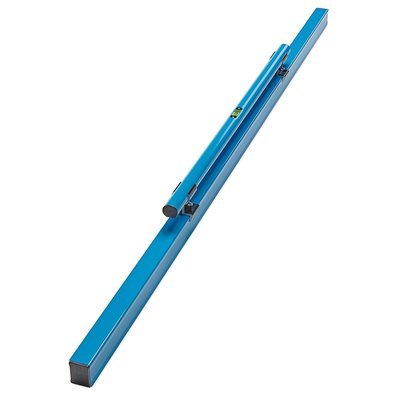
Aluminum screed board strikes off excess concrete level with your forms. Essential for smooth, even slabs.
Check Aluminum Screed Boards on Amazon → -
Hand Finishing
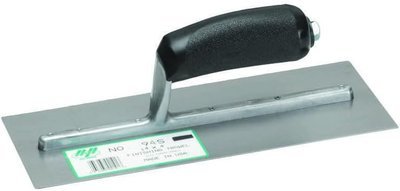
High-carbon steel trowel produces a hard, smooth finish once bleed water evaporates. Standard tool for every pour.
Check Concrete Trowels on Amazon → -
Knee Protection
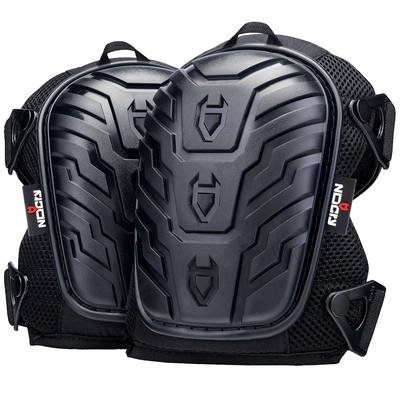
Heavy-duty gel knee pads protect your joints during long finishing hours on wet concrete and kneeling work.
Check NoCry Knee Pads on Amazon → -
Eye & Face Safety

ANSI Z87.1 approved safety glasses block alkaline wet concrete splashes before they reach your eyes.
Check NoCry Safety Glasses on Amazon →