Slab Size and Thickness Reference
| Application | Min Thickness | Recommended | Reinforcement |
|---|---|---|---|
| Sidewalk / Walkway | 3.5" | 4" | Optional fiber |
| Patio | 4" | 4" | Mesh recommended |
| Residential Driveway | 4" | 5" | Mesh or rebar grid |
| Garage Floor | 4" | 5-6" | Rebar grid required |
| RV/Truck Pad | 6" | 6-8" | Heavy rebar grid |
| Shed Foundation (small) | 4" | 4" | Mesh |
| Pool Deck | 4" | 4-5" | Mesh + control joints |
| Hot Tub Pad | 4" | 6" | Rebar grid |
For freeze-thaw climates (Northeast, Midwest, Mountain West), add 1 inch to the recommended thickness. Always check your local building code -- some jurisdictions require 6" minimum for driveways regardless of use.
Slab Project Planning Checklist
- Excavate to depth. Slab thickness + base depth + 2" for forms = total dig depth. For a 4" slab on 4" base, dig 10" below final grade.
- Compact subgrade. Native soil should be compacted to 95% before adding base. Don't skip this on clay or recently disturbed soil.
- Lay 4" of crushed stone or roadbase. Compact in 2" lifts. 95% compaction is the target.
- Set forms. 2x4 lumber for 3.5" slabs, 2x6 for 5" slabs. Stake every 4 feet. Check for level and proper slope (¼" per foot away from buildings).
- Place vapor barrier and reinforcement. 6 mil poly under interior slabs. Wire mesh or rebar grid raised 1.5-2" off the base on chairs.
- Pour and screed. Pour from far end working back. Screed level with the forms using a 2x4. Don't over-work the surface.
- Float, edge, and joint. Bull float once water sheen disappears. Edge the perimeter with an edging tool. Cut control joints every 8-10 feet.
- Final finish and cure. Broom finish for traction or trowel for smooth. Cover with plastic for 7 days minimum, lightly mist daily.
- Wait before loading. Foot traffic 24-48 hours. Vehicles 7 days. Heavy equipment 28 days.
Concrete by Slab Size -- Complete Reference Table
| Slab Size | Sq Ft | 4" Thick (yards) | 4" -- 80lb Bags | 6" Thick (yards) | 6" -- 80lb Bags | Est. Ready-Mix Cost |
|---|---|---|---|---|---|---|
| 4 × 4 ft | 16 | 0.22 | 10 bags | 0.33 | 15 bags | bags recommended |
| 4 × 8 ft | 32 | 0.43 | 20 bags | 0.65 | 30 bags | bags recommended |
| 10 × 10 ft | 100 | 1.36 | 62 bags | 2.04 | 92 bags | $170-$265 |
| 12 × 12 ft | 144 | 1.96 | 88 bags | 2.93 | 132 bags | $245-$382 |
| 12 × 20 ft | 240 | 3.26 | 147 bags | 4.89 | 220 bags | $408-$636 |
| 20 × 20 ft | 400 | 5.43 | 245 bags | 8.15 | 367 bags | $679-$1,059 |
| 20 × 30 ft (driveway) | 600 | 8.23 | ready-mix | 12.35 | ready-mix | $988-$1,481 |
| 24 × 24 ft (garage) | 576 | 7.91 | ready-mix | 11.87 | ready-mix | $949-$1,424 |
| 30 × 30 ft | 900 | 12.35 | ready-mix | 18.52 | ready-mix | $1,482-$2,224 |
| 40 × 60 ft (large pad) | 2,400 | 32.93 | ready-mix | 49.38 | ready-mix | $3,951-$5,927 |
All values include 10% waste. Ready-mix cost based on $120-$180/yard. For projects under 1 yard, bags are always cheaper (no short-load fee).
Bags vs Ready-Mix: Which to Use by Slab Size
- Projects under 1.5 cubic yards (~60 sq ft at 4")
- Fence posts, footings, mailbox bases
- Tight spaces trucks cannot access
- Weekend projects with flexible timing
- Areas with no good truck access
- Projects over 1.5 cubic yards
- Driveways, garage floors, large patios
- Time-sensitive pours (stays workable longer)
- Projects requiring consistent mix quality
- When labor cost of mixing bags outweighs delivery
Common Slab Questions with Specific Answers
Slab Size Guide FAQ
How much concrete do I need for a 10x10 slab?+
A 10x10 slab at 4 inches thick requires 1.36 cubic yards of concrete, or 62 bags of 80lb concrete including 10% waste. At 6 inches thick, you need 2.06 cubic yards or 62 bags.
How much concrete do I need for a 12x12 slab?+
A 12x12 slab at 4 inches thick requires 1.96 cubic yards of concrete, or 88 bags of 80lb concrete. At 6 inches thick, you need 2.97 yards or 89 bags. A standard patio or shed pad at this size is a good bag project.
How much concrete do I need for a 20x20 slab?+
A 20x20 slab at 4 inches thick requires 5.43 cubic yards. Order ready-mix concrete -- mixing 164 bags by hand is not practical. At 6 inches thick, you need 8.23 yards.
How much concrete do I need for a 4x4 slab?+
A 4x4 slab at 4 inches thick requires only 0.22 cubic yards -- about 7 bags of 80lb concrete. At 6 inches thick, that's 0.33 yards or 10 bags.
How much concrete do I need for a 4x8 slab?+
A 4x8 slab at 4 inches thick requires 0.43 cubic yards or 13 bags of 80lb concrete. This is a common size for steps, landings, and small pads. Bags are the right choice at this size.
Should I use bags or ready-mix concrete?+
Use bags for projects under 1.5 cubic yards (roughly a 10x12 slab at 4 inches). Use ready-mix for anything larger. Ready-mix trucks have short-load fees for less than 3 yards, but above that threshold the cost per yard drops significantly below bags.
How thick should a concrete slab be?+
Standard patio and sidewalk slabs are 4 inches thick. Driveways and garage floors should be 4-5 inches. RV pads, heavy equipment areas, and areas with poor soil need 6 inches. Add 1 inch in freeze-thaw climates.
Affiliate Disclosure: As an Amazon Associate, this site earns from qualifying purchases. Links on this page may earn a small commission at no extra cost to you.
Recommended Jobsite Tools
-
Leveling & Screeding
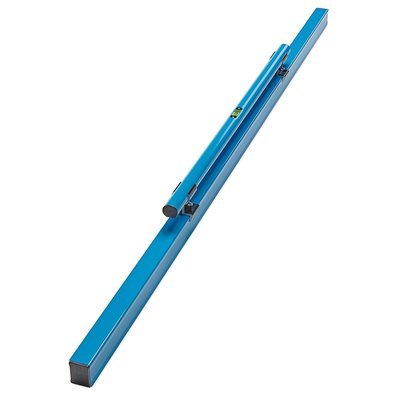
Aluminum screed board strikes off excess concrete level with your forms. Essential for smooth, even slabs.
Check Aluminum Screed Boards on Amazon → -
Hand Finishing
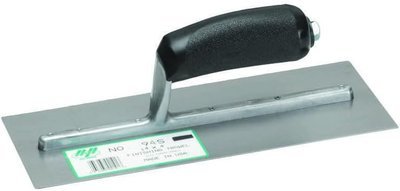
High-carbon steel trowel produces a hard, smooth finish once bleed water evaporates. Standard tool for every pour.
Check Concrete Trowels on Amazon → -
Knee Protection
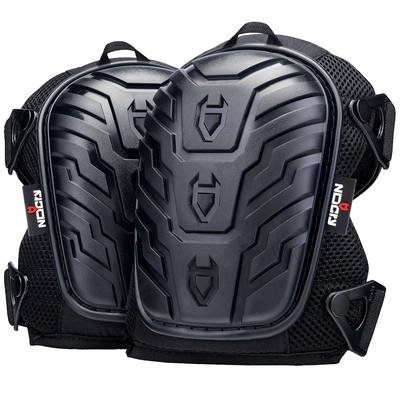
Heavy-duty gel knee pads protect your joints during long finishing hours on wet concrete and kneeling work.
Check NoCry Knee Pads on Amazon → -
Eye & Face Safety

ANSI Z87.1 approved safety glasses block alkaline wet concrete splashes before they reach your eyes.
Check NoCry Safety Glasses on Amazon →