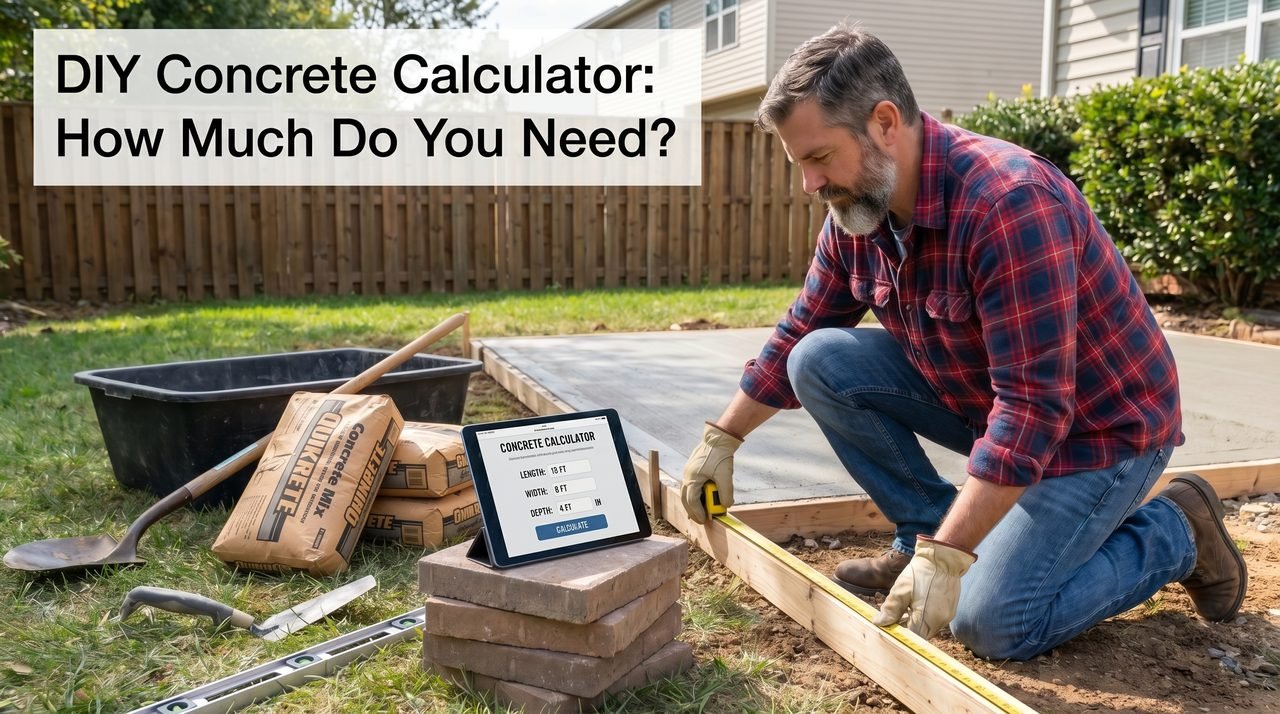
Concrete Calculator
Your Results
Concrete Driveway
How thick, what PSI, rebar or mesh? Full guide for a residential or commercial driveway pour.
Backyard Patio
3-4 inch slabs for foot traffic. Material list, form building, and curing tips.
Fence Post Footings
Depth, diameter, and how many bags of Quikrete per post for a solid, lasting fence.
Gravel Driveway
Depth recommendations, compaction layers, and ton calculations for crushed stone driveways.
How to Use These Calculators
Measure your project area in feet. For irregular shapes, break it into rectangles and add the areas together. Always measure at the widest points.
Enter your dimensions and thickness. Our calculators automatically add a 10% waste factor -- the industry standard to account for spillage and uneven subgrades.
Use the bag count or cubic yards result to buy the right amount. Under 1.5 yards -- buy bags. Over 1.5 yards -- get a ready-mix quote from your local plant.
All of our calculators are built by contractors for homeowners. Every result includes a 10% waste factor because in the real world, concrete projects always use slightly more than the theoretical volume due to subgrade variations, spillage during mixing, and form bleed. Running short mid-pour causes cold joints -- structural weak points that shorten your slab's life. Always buy slightly more than the minimum calculated amount.
Bags vs Ready-Mix: When to Switch
The break-even point between bagged concrete and a ready-mix truck delivery is around 1.5 cubic yards. Below that, bags from Home Depot or Lowes are cheaper. Above that, ready-mix saves you time, labor, and usually money. A 10x10 patio at 4 inches needs about 1.23 yards - right at the edge where either option works. A 20x20 driveway at 5 inches needs 6.17 yards - that is a truck delivery, no question.
Under 1.5 cubic yards. Fence posts, small pads, patch jobs, sonotubes. You control the pace and can stop anytime. Average cost: $250-$315 per cubic yard in bags.
Over 1.5 cubic yards. Driveways, garage floors, large patios. Truck arrives mixed and ready. Average cost: $125-$195 per cubic yard plus $75-$150 delivery.
2026 Concrete Prices by Project Size
Every figure in this table includes a 10% waste buffer, uses 80lb bags at 0.60 cubic feet of yield each, and prices ready-mix at the 2026 national range of $125-$195 per cubic yard.
| Project and size | Concrete needed (order this much) | 80 lb bags to buy | Ready-mix cost | Bags or truck? |
|---|---|---|---|---|
| One fence post hole, 10 in wide x 36 in deep | 0.07 cubic yards including 10% waste (0.06 exact) | 3 bags of 80 lb concrete mix | Not sold by the truck at this size | Bags only |
| AC unit pad, 3 ft x 3 ft x 4 in thick | 0.12 cubic yards including 10% waste (0.11 exact) | 6 bags of 80 lb concrete mix | Not sold by the truck at this size | Bags only |
| Sidewalk, 4 ft x 20 ft x 4 in thick | 1.09 cubic yards including 10% waste (0.99 exact) | 49 bags of 80 lb concrete mix | $136 to $213 in ready-mix, plus $75 to $150 delivery and a $50 to $150 short-load fee | Bags are cheaper under 1.5 cubic yards |
| Backyard patio, 10 ft x 12 ft x 4 in thick | 1.63 cubic yards including 10% waste (1.48 exact) | 74 bags of 80 lb concrete mix | $204 to $318 in ready-mix, plus $75 to $150 delivery and a $50 to $150 short-load fee | Either works, this sits right at the 1.5 cubic yard break-even |
| Single-car driveway, 10 ft x 20 ft x 5 in thick | 3.40 cubic yards including 10% waste (3.09 exact) | 153 bags of 80 lb concrete mix | $425 to $663 in ready-mix, plus $75 to $150 delivery | Order the truck, 153 bags is roughly 6 tons to mix by hand |
| Two-car garage floor, 20 ft x 20 ft x 5 in thick | 6.79 cubic yards including 10% waste (6.17 exact) | 306 bags of 80 lb concrete mix | $849 to $1,324 in ready-mix, plus $75 to $150 delivery | Order the truck, no question |
Volumes shown include the 10% waste buffer contractors add for spillage, form bulging, and subgrade settling. Exact math is in parentheses. Ready-mix priced at $125 to $195 per cubic yard, the 2026 national range. Delivery ($75 to $150) and short-load surcharge ($50 to $150 on orders under 3 to 4 cubic yards) are billed separately. Verified against published 2026 industry pricing (Concrete Network, July 2026; NRMCA industry average $179.89 per cubic yard) and live Home Depot bag pricing, August 6, 2026. Delivery fee ($75-$150) and short-load surcharge ($50-$200 for under 3 yards) are additional.
Frequently Asked Questions
How do I calculate how much concrete I need?+
Multiply length × width × depth (all in feet), then divide by 27 to get cubic yards. For example, a 10×10 slab at 4 inches deep: 10 × 10 × 0.333 ÷ 27 = 1.23 cubic yards.
How many 60lb bags of concrete do I need per yard?+
It takes 60 bags of 60lb concrete to make one cubic yard. Each bag yields 0.45 cubic feet, and 27 ÷ 0.45 = 60 bags.
How many 80lb bags of concrete do I need per yard?+
It takes 45 bags of 80lb concrete to make one cubic yard. Each 80lb bag yields 0.60 cubic feet, and 27 ÷ 0.60 = 45 bags.
What does a cubic yard of concrete cost?+
Ready-mix concrete typically costs $125-$195 per cubic yard depending on your region, mix design, and delivery fees.
How do I calculate concrete for a circle?+
Use π × radius² × depth ÷ 27 for cubic yards. For a 10ft diameter circle at 4 inches: 3.14159 × 25 × 0.333 ÷ 27 = 0.97 cubic yards.
Should I order extra concrete?+
Yes -- always add 5-10% to your calculated amount to account for waste, spillage, and uneven subbase.
When can I walk on new concrete?+
Light foot traffic is generally safe after 24-48 hours. Full cure strength is reached in 28 days. Avoid vehicle traffic for at least 7 days.
Affiliate Disclosure: As an Amazon Associate, this site earns from qualifying purchases. Links on this page may earn a small commission at no extra cost to you.
Recommended Jobsite Tools
-
Leveling & Screeding
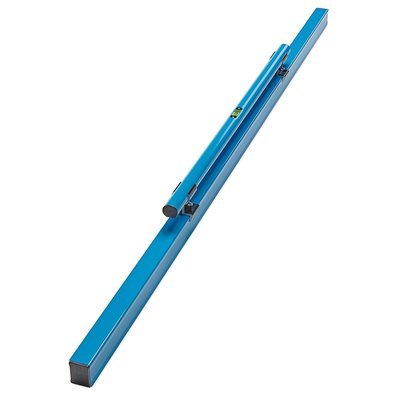
Aluminum screed board strikes off excess concrete level with your forms. Essential for smooth, even slabs.
Check Aluminum Screed Boards on Amazon → -
Hand Finishing
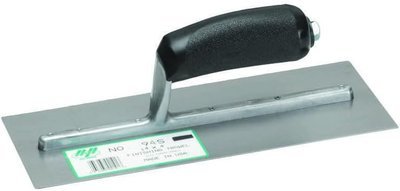
High-carbon steel trowel produces a hard, smooth finish once bleed water evaporates. Standard tool for every pour.
Check Concrete Trowels on Amazon → -
Knee Protection
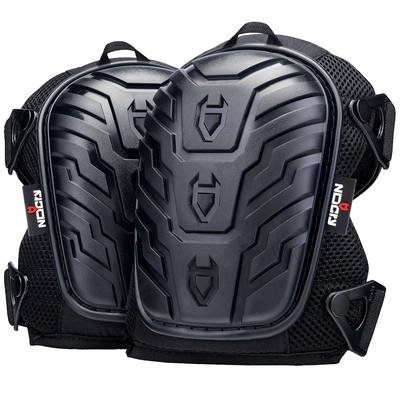
Heavy-duty gel knee pads protect your joints during long finishing hours on wet concrete and kneeling work.
Check NoCry Knee Pads on Amazon → -
Eye & Face Safety

ANSI Z87.1 approved safety glasses block alkaline wet concrete splashes before they reach your eyes.
Check NoCry Safety Glasses on Amazon →